Free Zone vs Mainland in Qatar for Restaurant Owners
Restaurant-owner decision guide: mainland-first for public F&B, when QFZA still fits, why QFC is not the restaurant path — before you pay for formation.
- Published
- 2026-05-12
- Last Updated
- 2026-07-13
Quick Answer
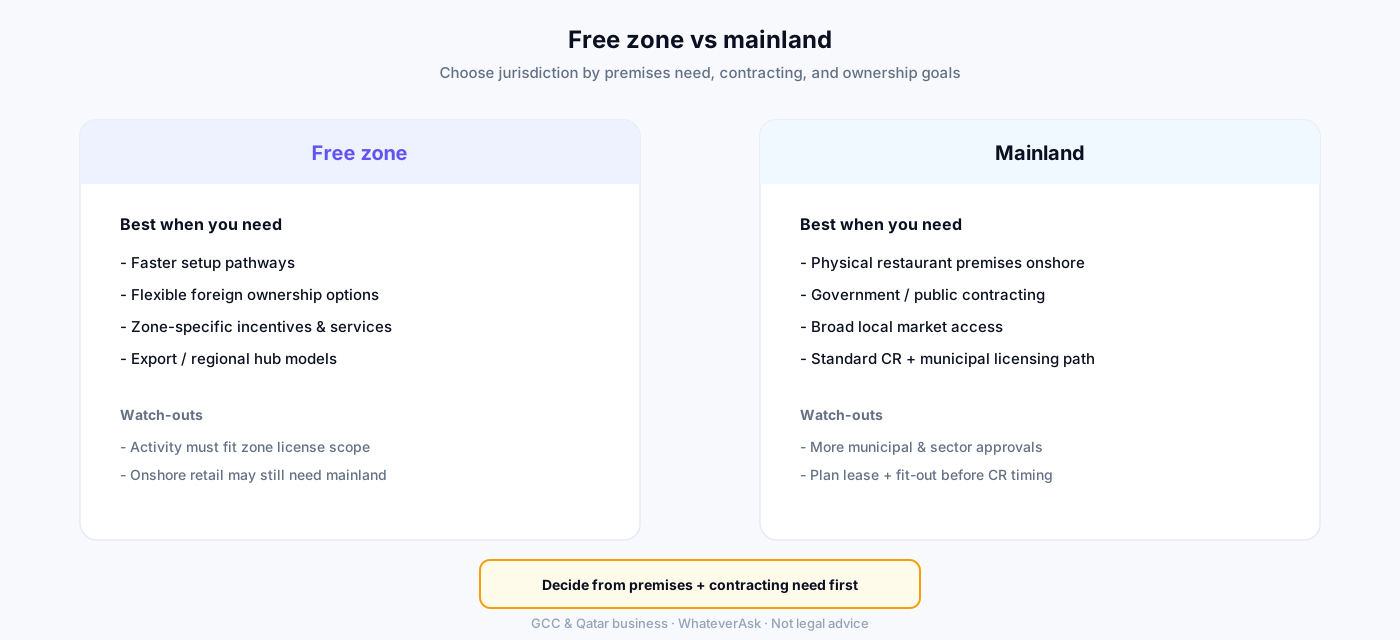
Free zone vs mainland in Qatar for a restaurant is a jurisdiction decision, not a formation tutorial. Choose the wrapper that matches how guests (or orders) will actually reach your kitchen — before you pay for CR packages or sign a grease-trap lease.
For most restaurant founders:
- Public dining room / mall F&B / street walk-in → plan mainland-first. Premises-tied commercial licensing and municipality / health gates expect an onshore operating story.
- Cloud kitchen / catering / export-eligible models with no public walk-in → free-zone / QFZA *may* fit if your activities are eligible and you still verify premises / distribution rules — do not assume a brochure equals a kitchen license.
- QFC (Qatar Financial Centre) → not the restaurant path. Treat QFC as a financial-services jurisdiction, not an F&B shortcut.
- Once jurisdiction is locked, form the operating company on Company Formation in Qatar.
- Then chase premises / health gates on License Requirements and the full spine on How to Start. Budget on Cost to Start.
⚠️ Rules change. Free-zone activity lists, mainland ownership rules, and premises licensing update. Verify current requirements on MoCI, QFZA, QFC, Invest Qatar, and Hukoomi before you pay deposits.
Introduction
Most “free zone vs mainland” pages are written for consultancies, trading desks, and regional HQs. Restaurant founders fail those pages for a simple reason: guests walk into a kitchen regulators must approve — or orders leave a premises that still needs food-trade fitness.
This Knowledge Product stays jurisdiction decision-only: mainland vs free-zone (QFZA) for restaurant / cloud-kitchen models, with an explicit QFC non-path callout. It deliberately does not re-teach MoCI Single Window filings, CR document packs, MOPH inspections, or first-year cost tables — those belong on Formation, License, Cost, and How-to-Start.
Use this page when you are still choosing where the company should live. When that choice is locked, go form the company — do not keep shopping jurisdiction brochures while rent quotes expire.
Decision Table: Model × Jurisdiction
Map your concept to a row before you take any formation quote:
| Operating model | Default jurisdiction lean | Why |
|---|---|---|
| Street / mall restaurant (public dining room) | Mainland | Walk-in guests + premises-tied commercial / municipality / health story |
| Café / QSR with seating | Mainland | Same premises-led path as above |
| Cloud kitchen / dark kitchen (delivery-only, no public dining) | Mainland common; QFZA only if eligible | Still a food premises — confirm whether your site and activities can sit in-zone; never assume “delivery-only = free zone” |
| Catering / central kitchen / export-oriented production | Compare mainland vs QFZA | Eligibility and logistics matter more than sticker price; verify activity lists |
| HQ / brand / IP / consulting only (no kitchen you operate) | Free-zone often viable | Different product — not a restaurant opening |
| Hotel F&B under hotel license | Follow hotel / tourism licensing path | Do not force a standalone free-zone restaurant template |
Operator rule: If strangers can walk in and order food on site, lean mainland. If you are buying a services flexi-desk package to “open a restaurant later,” you are buying the wrong tool.
Mainland for Restaurant Operators
Why mainland is the default for public F&B
Mainland entities can hold commercial leases in districts open to the public, support broader onshore contracting, and align with the stack most street / mall kitchens actually need: CR → commercial / trade permit for a specific site → municipality fitness → MOPH food-establishment registration → Civil Defence readiness.
Restaurants, cafés, and mall F&B units almost always need licensing tied to a physical premises. A formation certificate without a premises story does not feed guests.
Lease + CR coupling (operator view)
Treat jurisdiction and lease fitness as one decision:
- Landlords and banks will ask for CR details that match a food business.
- Health and municipality inspectors look at the unit, not your LinkedIn headline.
- Idle rent while you discover the free-zone package cannot license that mall unit is the most common early cash burn.
Foreign ownership rules have liberalized for many activities — including many F&B cases — but eligibility is activity-specific. Verify your exact codes on official MoCI / Invest Qatar channels before you promise investors a structure. Formation owns the CR filing detail; this page only forces the mainland-first lean for public dining.
Free-zone / QFZA — When It Helps (and When It Does Not)
When free-zone / QFZA can still help
Free zones (including QFZA — Qatar Free Zones Authority ecosystems) optimize for packaged setup, foreign-ownership-friendly activity sets, and operational models that do not depend on a public street dining room. They can fit:
- Eligible non-walk-in food production / catering / export-oriented models when the zone’s activity list and premises rules allow it
- Brand / HQ / services wrappers that sit beside a separate mainland operating kitchen (group structures — get counsel; do not invent dual entities from a brochure)
- Founders comparing 12-month TCO for a true non-retail model against a mainland flexi or light industrial kitchen site
What free-zone usually does not unlock
- A legal street or mall restaurant solely because the company was formed in-zone
- Skipping MOPH / municipality / Civil Defence gates for a public kitchen
- “Cheaper than mainland” as proof the product is the same — often you are comparing a services package to a public kitchen
If an agent says “form in free zone, open the restaurant anywhere,” stop. Ask which premises license that entity can hold for your exact unit. Put the answer in writing against official channels.
QFC Callout — Not the Restaurant Path
QFC (Qatar Financial Centre) is a financial-services and related professional jurisdiction. It is not the standard path to open a restaurant, café, or cloud kitchen for walk-in or delivery F&B.
Do not:
- Treat a QFC company as a shortcut to a grease-trap mall unit
- Confuse QFC branding with QFZA / free-zone F&B eligibility
- Pay QFC-oriented packages because a slide deck said “100% foreign ownership” without checking restaurant activity fit
Confirm any edge case on official QFC materials and licensed advisors. For restaurant founders reading this page, the working rule is: QFC ≠ restaurant path. Choose mainland (typical) or an eligible free-zone / QFZA model — then form on the Formation guide.
Cost, Visas & Market Access (Operator Language)
Compare products, not stickers:
| Dimension | Mainland F&B lean | Free-zone / QFZA lean |
|---|---|---|
| What you are buying | Onshore operating company + path to premises-tied licenses | Packaged zone setup optimized for eligible activities |
| Visa / staffing | Quotas tied to office / activity reality — plan headcount early | Package visa slots; extras and office tiers add cost |
| Market access | Stronger fit for walk-in retail and many onshore contracts | Strong for eligible B2B / export / non-walk-in models; retail rules must be verified |
| Hidden cost | Fit-out + idle rent if jurisdiction wrong | Paying twice when you later need a mainland kitchen entity |
| TCO habit | 12-month all-in (formation + lease + inspections + visas) | Same — include the cost of being unable to open the intended site |
Free-zone packages can look cheaper for services. Mainland restaurants often look expensive because they are buying a public kitchen. Use Cost to Start a Restaurant in Qatar for budget bands after jurisdiction is locked — not as a substitute for this decision.
How to Decide in 30 Minutes
Answer four questions in writing:
- Do customers visit a physical dining site you control? → If yes, lean mainland.
- Is the kitchen delivery-only / catering / export with no public walk-in? → Compare mainland vs QFZA eligibility — do not auto-pick free zone.
- Are you actually opening F&B, or buying an HQ / services wrapper? → If HQ/services only, free-zone may fit; if F&B, stay on the restaurant rows above.
- Did anyone pitch QFC as the restaurant route? → Treat as a red flag; re-read the QFC callout and verify official scope.
Then:
- Put two quotes (mainland path vs free-zone path) into a simple 12-month TCO table including the cost of a wrong premises outcome.
- Lock the jurisdiction decision in one paragraph shared with partners and your PRO.
- Move to Company Formation in Qatar — stop shopping jurisdictions.
What This Page Does *Not* Finish
Stay in your lane so the Start cluster stays trustworthy:
| After jurisdiction is locked you still need… | Canonical page |
|---|---|
| Entity type, CR/WLL, activity codes, MoCI / Single Window filing | Company Formation in Qatar |
| Full opening sequence (lease → health → fit-out → visas → soft open) | How to Start a Restaurant Business in Qatar |
| Activity / permit / health registration detail | Restaurant License Requirements in Qatar |
| First-year budget bands | Cost to Start a Restaurant in Qatar |
If a section starts sounding like “how to file CR” or “how to pass MOPH,” stop and link out.
Common Jurisdiction Mistakes
- Buying a free-zone services package for a street or mall restaurant. Brochure ≠ kitchen license.
- Assuming delivery-only automatically means free zone. Cloud kitchens still need a coherent premises / activity story.
- Treating QFC as a restaurant shortcut. Financial centre ≠ F&B path.
- Paying formation deposits before the jurisdiction paragraph is written. Agents optimize for close rate, not grease traps.
- Comparing free-zone sticker price to mainland kitchen TCO. Different products.
- Signing a heavy F&B lease while jurisdiction is still “TBD.” Idle rent follows.
- Re-opening Formation as a second free-zone essay. Use Formation for CR; use this page for the wrapper decision.
Checklist
Before you pay any formation deposit
- [ ] One-page concept: cuisine, service model, seating vs delivery, walk-in or not
- [ ] Decision-table row selected (street/mall · cloud · catering/export · HQ/services)
- [ ] Mainland-first recorded for public dining / mall F&B
- [ ] If free-zone / QFZA claimed: written eligibility note against official activity / premises rules
- [ ] QFC explicitly ruled out for restaurant path (unless a documented non-F&B edge case)
- [ ] 12-month TCO sketch comparing the real products
- [ ] Named internal owner for the jurisdiction decision (not only the agent)
After jurisdiction is locked
- [ ] Switch to Company Formation for CR / entity
- [ ] Re-check License Requirements for premises / health gates
- [ ] Re-check budget on Cost to Start
- [ ] Follow the spine on How to Start
Frequently Asked Questions
Do I need a free zone to open a restaurant in Qatar?
Usually no for a public dining room or mall F&B unit. Free zones help many service businesses; street and mall restaurants typically need a mainland premises license. Use free zone only when your operating model truly does not require that onshore F&B site — and still verify.
Can a free-zone company run a street or mall restaurant?
Usually not as a complete answer. A free-zone entity alone does not finish a walk-in restaurant opening. Physical F&B on the street or in a mall almost always needs onshore / mainland licensing tied to the premises. Decide jurisdiction here; form the correct operating company on the Formation guide.
Is QFC a path for restaurants in Qatar?
No as a working rule. QFC is a financial-services jurisdiction, not the standard restaurant / café / cloud-kitchen path. Do not buy QFC-oriented packages to open a grease-trap unit. Verify any claimed exception on official QFC materials — restaurant founders should default elsewhere.
When does a cloud kitchen fit free-zone vs mainland?
Delivery-only does not auto-select free zone. Confirm whether your kitchen site, activities, and distribution model are eligible for a free-zone / QFZA wrapper; many cloud kitchens still form and license on a mainland premises path. Compare eligibility and 12-month TCO before deposits.
Should I decide free zone vs mainland before company formation?
Yes. Jurisdiction is upstream of CR spend. Formation assumes you already know which wrapper you are filing. If you are still undecided, finish this page first, then file on Company Formation in Qatar.
Are free-zone packages cheaper for restaurants?
They can look cheaper when they are priced as services packages. A mainland restaurant often looks expensive because it is buying a public kitchen (lease, inspections, fit-out). Compare 12-month TCO and premises outcomes — not the cheapest license sticker. See Cost to Start.
Can I move from free zone to mainland later?
Possible in some group structures, but expensive and slow if you already signed the wrong lease or marketed the wrong entity. Treat “migrate later” as a recovery plan, not a strategy. Pick the jurisdiction that matches year-one operations.
Related Articles
Conclusion
Free zone vs mainland in Qatar is the restaurant founder’s jurisdiction gate: mainland-first for public dining and mall F&B, free-zone / QFZA only when the model is truly eligible and non-walk-in (or otherwise zone-fit), and QFC not the restaurant path. It is not a CR filing guide and not a full opening manual.
Lock the wrapper that matches how food will actually be sold — then form the company, license the premises, and follow the How-to-Start critical path. Verify current rules before you spend.
Last Updated
Last Updated: 2026-07-13 Last Reviewed: 2026-07-13 Published: 2026-05-12
Editorial timestamps on this page: datePublished preserved from first publish (2026-05-12); dateModified bumped for this rewrite-expand (WHA-371 / CEO lock WHA-370). Sibling Start pages keep their own dates (WHA-305).
Sources / method: Educational synthesis for restaurant founders (2026), aligned to official MoCI / QFZA / QFC / Invest Qatar / Hukoomi channel patterns used across WhateverAsk Qatar setup guides. Not legal advice; always re-check current government requirements.