Cost to Start a Restaurant in Qatar: Realistic First-Year Budget
Estimate Qatar restaurant setup costs — formation, license, lease, fit-out, visas, and first-year runway — with ranges labeled as estimates, not quotes.
- Published
- 2026-05-08
- Last Updated
- 2026-05-08
Quick Answer
Budget a Qatar restaurant as three ledgers, not one license fee:
| Ledger | What it covers | Planning posture |
|---|---|---|
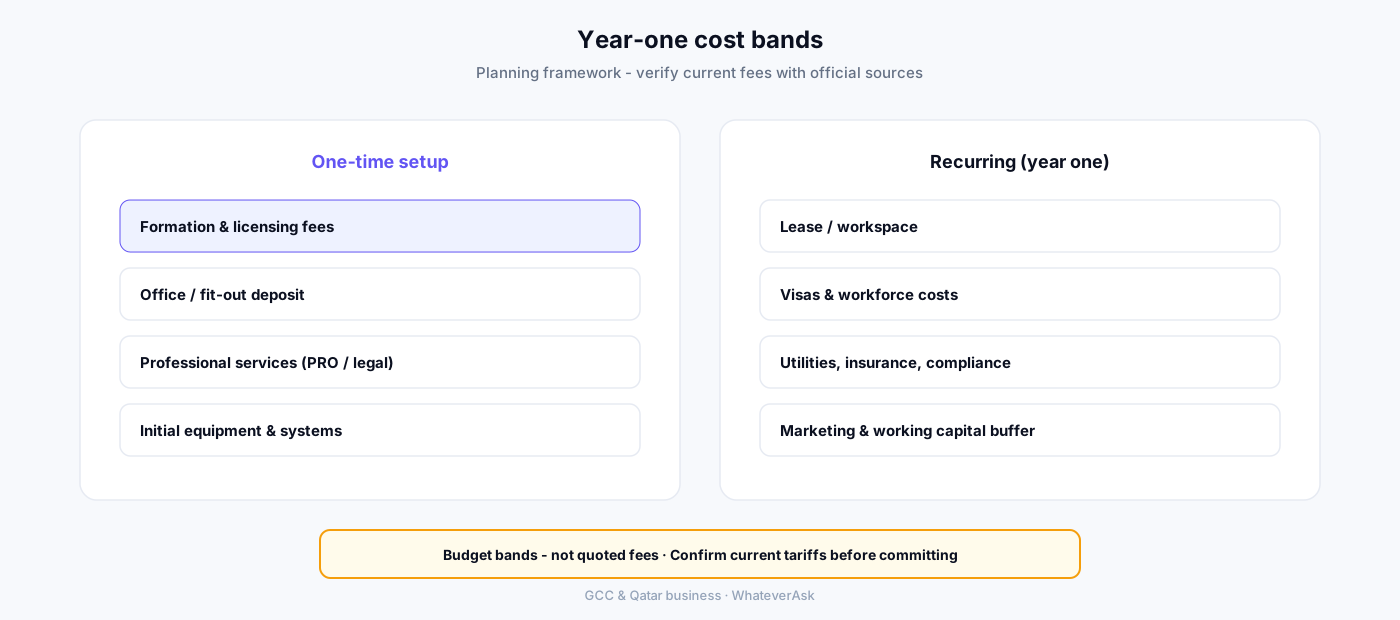
| One-time setup | Formation, licenses, deposits, fit-out, equipment, pre-open payroll | Capex + project contingency |
| Recurring year one | Rent, utilities, labor, COGS, marketing, renewals, PRO/accounting | Monthly burn × 12 |
| Hidden / delay | Idle rent during inspections, redesign, extra visas, banking minimums | Explicit contingency line |
Illustrative total first-year planning bands for an independent outlet (estimates only, 2026):
| Concept scale | Illustrative all-in year-one band (QAR) | What drives the band |
|---|---|---|
| Lean café / small counter | ~150,000 – 400,000 | Strong landlord shell, small team |
| Casual dining / full kitchen | ~400,000 – 1,200,000+ | New hood, larger fit-out, more visas |
| Premium / large seating | 1,200,000+ | Spec finishes, long pre-open rent |
⚠️ These are planning ranges, not quotes. Government fees, landlord conditions, and fit-out markets move. Re-price with itemized local quotes and verify fee schedules on official portals before committing.
Pair with How to Start a Restaurant in Qatar and License Requirements.
Introduction
Founders under-budget restaurants when they copy services company formation prices. A flexi-desk consultancy can launch for a fraction of what a grease-trap kitchen costs. Your real number is dominated by lease + fit-out + labor runway, with licenses as necessary but smaller lines.
This guide shows how to build a first-year budget that survives inspection delays — without fake precision.
Why This Matters
Cash kills more openings than recipes. Typical failure modes:
- Fit-out 70% done when Civil Defence requests changes → idle rent
- Visas approved for fewer seats than the roster needs → overtime or delayed open
- Marketing spend peaks before soft-open readiness → refunds and reputation damage
- “All-in setup” package excludes food registration support, medicals, or second visa batches
A credible budget makes delay expensive on paper before it is expensive in reality.
Step-by-Step: Build the Budget
Step 1 — Define the concept card
Seats, service model, hours, delivery mix, and whether the unit is shell, semi-fitted, or turnkey. Without this card, every quote is fiction.
Step 2 — Price one-time government and professional lines
Illustrative mainland formation + professional support for an operating company often lands in a broad QAR 15,000 – 50,000+ band before serious rent — similar to general business setup ranges — but restaurants add sector approvals, translations, and PRO time. Free-zone service packages (often marketed ~QAR 25,000 – 80,000+) are usually the wrong comparison set for street F&B; use them only if your model truly is not premises-led.
Add a line for attestations / translations (illustrative QAR 2,000 – 8,000).
Step 3 — Price the lease correctly
Model:
- Security deposit (often multiple months)
- Base rent from keys to open (including fit-out months)
- Service charges / CAM if any
- Landlord technical fees in malls
Idle rent during licensing is a setup cost, not an operating surprise.
Step 4 — Fit-out and equipment
Split:
- MEP / hood / fire / grease
- Front-of-house finishes
- Kitchen equipment and smallwares
- POS / CCTV / network
- Initial inventory and uniforms
Lean counters in good shells sit lower; new full kitchens dominate the mid and upper bands above.
Step 5 — People and visas
Budget medicals, residency processing, and per-person government/medical fees for the opening roster — plus a buffer for replacements. Food-handler clearances are part of pre-open cost, not optional HR polish.
Step 6 — Pre-open operating runway
Include 1–3 months of payroll training, utilities trials, tasting waste, aggregator commissions setup, and soft-open discounts. Many owners fund only “opening week” and stall in week three.
Step 7 — Recurring year-one stack
Rent, labor, COGS, utilities, marketing, accounting, PRO, insurance, license renewals, pest contract, and maintenance. F&B monthly burn is structurally higher than lean consultancies (illustrative services businesses may plan QAR 3,000 – 15,000/month admin burn; restaurants scale with covers and headcount far above that).
Step 8 — Add contingency and decision gates
Add 15–25% contingency on fit-out and one month extra rent for inspection slip. Create kill gates: no heavy equipment orders until activity codes and landlord fitness are confirmed.
Framework: One-Time vs Recurring vs Hidden
| Type | Examples | How to estimate |
|---|---|---|
| One-time | Formation, deposits, fit-out, equipment, pre-open labor | Get 2 itemized contractor quotes |
| Recurring | Rent, wages, COGS, renewals | Build a 12-month P&L at conservative covers |
| Hidden | Redesign, courier/attestation, banking minimums, extra visa tiers, marketing redo | Explicit % lines — do not “hope” |
Compare 12-month TCO, not the cheapest license sticker. Mainland restaurants often look expensive vs free-zone service packages because they are buying a different product: a public kitchen.
Best Practices
- Itemized everything. Reject single-line “turnkey restaurant setup” quotes.
- Separate government vs professional fees. Transparency prevents double-billing.
- Rent during fit-out is real. Put it above the line.
- Model two headcount cases. Opening roster vs +20% peak.
- Tie spend to license gates. Big PO releases after CR/activity confirmation and after fire drawings approval.
- Keep ops investment visible. SOPs and training are cheaper than comps; see Restaurant Operations.
Common Mistakes
- Budgeting only formation fees.
- Ignoring soft-open discounting and tasting waste.
- Assuming aggregator onboarding is free and instant.
- No contingency for Civil Defence rework.
- Buying premium FOH finishes before hood/fire is funded.
- Underestimating owner living costs during pre-open (if self-funded).
- Using another city’s cost blog without Doha lease comps.
Practical Examples (Generalized Bands)
Example — Lean café counter
- Formation + PRO + basic licenses: lower tens of thousands QAR
- Deposit + 3 months rent (incl. fit-out): often the largest early check
- Light fit-out in semi-fitted shell: controlled six figures
- 6–10 staff medicals/visas: material but secondary to rent/fit-out
- Planning band: toward the 150k – 400k first-year illustrative range if concept stays small and delays are short
Example — Casual dining new kitchen
- Hood, fire, full BOH: fit-out jumps hard
- Longer pre-open rent and larger roster
- Planning band: 400k – 1.2M+ first-year illustrative depending on seats and finishes
Numbers are educational bands for conversation with advisors — not offers, appraisals, or fee schedules.
Action Checklist
- [ ] Concept card (seats, model, hours) written
- [ ] Two itemized fit-out quotes requested
- [ ] Lease TCO includes fit-out months + deposit
- [ ] Formation + license + PRO fees itemized
- [ ] Visa/medical matrix costed for opening roster
- [ ] Pre-open payroll and waste budgeted
- [ ] 12-month P&L at conservative covers
- [ ] Contingency % set (fit-out + rent buffer)
- [ ] Spend gates tied to license milestones
- [ ] Cross-check sequence via start guide
- [ ] Cross-check approvals via license guide
Frequently Asked Questions
How much does it cost to start a restaurant in Qatar?
Independent outlets often plan in broad first-year bands from roughly QAR 150,000 to QAR 1,200,000+ depending on size, shell condition, and delays. Treat any single number without a concept card as unreliable.
What is the biggest cost line?
Usually lease + fit-out + labor runway, not the trade license sticker. Government fees matter; they rarely dominate.
Are free-zone packages cheaper?
They can be cheaper for service companies. For public restaurants, mainland premises costs usually dwarf package savings. Compare total year-one cost for your real operating model.
How much contingency should I hold?
Many operators plan 15–25% on fit-out and at least one extra month of rent for inspection slip. High-complexity kitchens may need more.
Do I need capital in the bank for company formation?
Banking KYC may expect credible funding evidence and can involve minimum balance expectations that vary by bank. Ask your target bank early; do not assume formation alone opens an account.
Can I open phased to reduce cost?
Yes — soft-open limited hours/covers, delay alcohol-adjacent concepts (where even applicable), or stage FOH finishes after BOH passes inspection. Do not phase away mandatory food-safety or fire gates.
Conclusion
Price the restaurant you will actually build: mainland premises, inspectable kitchen, and a roster that can pass medicals. Use bands and contingencies, demand itemized quotes, and gate big spend on licensing milestones. That is how you avoid a beautiful dining room you cannot legally open.
Sources / method: Cost bands are illustrative planning estimates synthesized for education (2026), informed by typical formation ranges used across WhateverAsk Qatar business guides and F&B project patterns — not official fee tariffs. Always re-price locally and confirm government fees on MOCI / Single Window / relevant authority pages.