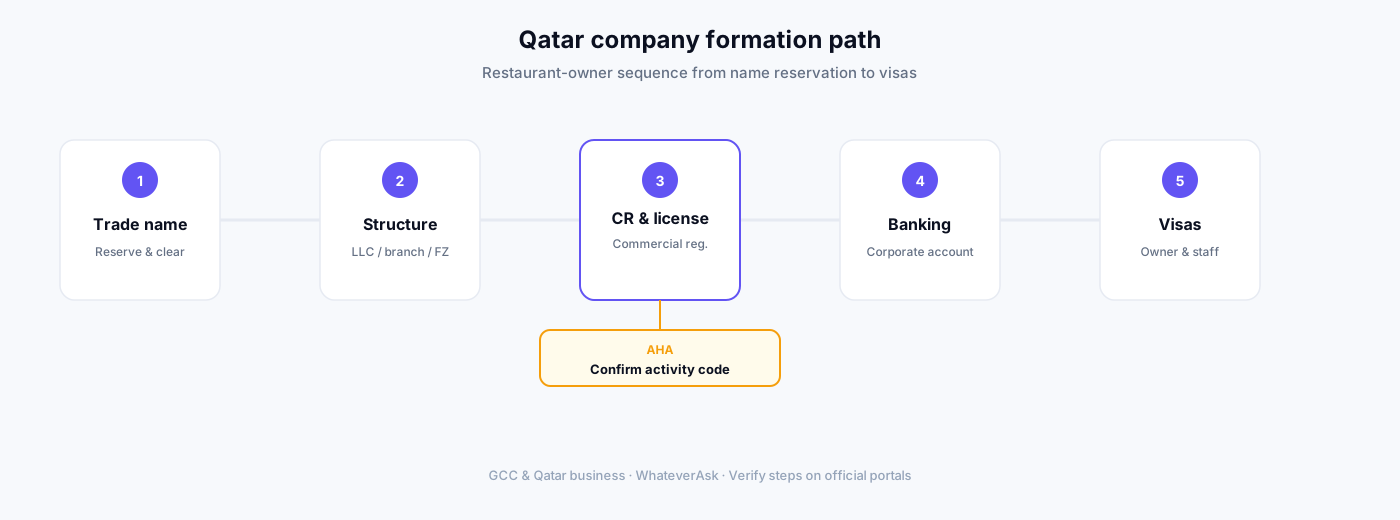
Company Formation in Qatar for Restaurant Owners (CR, Activity Codes, Ownership)
Restaurant-owner guide to Qatar company formation — entity type, CR/WLL, F&B activity codes, ownership notes, and MoCI Single Window — before you chase premises licenses.
- Published
- 2026-05-19
- Last Updated
- 2026-05-19
Quick Answer
Company formation in Qatar for a restaurant is the legal wrapper that lets you hold a Commercial Registration (CR), bank account pathway, and — later — premises-tied licenses. It is not the same as opening a kitchen.
For most public-facing F&B concepts you:
- Lock the concept and draft food-trade activity codes before you reserve a trade name
- Choose a mainland operating company suited to a walk-in or mall premises (LLC / WLL is the usual vehicle)
- Confirm ownership eligibility for your exact activity on official MoCI / Invest Qatar channels — do not assume 100% foreign ownership from a brochure
- Prepare shareholder IDs, articles / memorandum, and required attestations
- File through MoCI electronic services or the Investor Single Window and obtain Commercial Registration
- Only then chase commercial / trade permits, municipality fitness, and MOPH food registration for a specific site
⚠️ Rules change. Ownership lists, activity catalogues, and Single Window steps update. Verify current requirements on MoCI, the Investor Single Window, Invest Qatar, and Hukoomi before you pay deposits or order equipment.
After CR, use Restaurant License Requirements in Qatar for permits and How to Start a Restaurant Business in Qatar for the full opening spine. Budget bands live on Cost to Start a Restaurant in Qatar.
Introduction
Most “company formation in Qatar” packages are written for freelancers, consultancies, and flexi-desk services. Restaurant founders fail those packages for a simple reason: guests walk into a premises regulators must approve. Your entity, activity codes, and CR must match a food business — not a generic trading desk.
This Knowledge Product stays formation-only: entity type, ownership notes, F&B activity-code mapping at registration, documents, and the MoCI / Single Window path to CR. It deliberately does not re-teach lease negotiation, MOPH inspections, Civil Defence, visas, or soft-open — those belong on the How-to-Start and License guides.
Use this page when you are choosing the legal vehicle and filing for CR. If you are still choosing free zone vs mainland as a jurisdiction, start with Free Zone vs Mainland in Qatar, then return here to form the company.
Why Formation Order Matters for F&B
Formation order protects cash that kitchens cannot recover:
| Decision | Get it right early | Cost of getting it wrong |
|---|---|---|
| Activity codes | CR activities match menu + service model | Banking, renewals, and MOPH food registration stall |
| Jurisdiction wrapper | Mainland entity for street / mall F&B | Free-zone “company formed” with nowhere legal to cook for walk-in guests |
| Ownership structure | Eligible shareholding for your activity | Rework of MoA / partners after you paid for fit-out |
| Trade name | Brand matches available name reservation | Signage and packaging reprints |
| CR before heavy lease | Entity exists to hold the commercial story | Idle rent while paperwork catches up |
Consulting setups can form first and find clients later. Restaurants pay rent and contractors on a clock. Treat CR as a critical-path gate, not a souvenir certificate.
Choose the Right Entity for a Restaurant
LLC / WLL (default operating vehicle)
For a public restaurant, plan a mainland LLC / WLL that can hold a commercial lease in a location open to walk-in guests. It is the default operating company for F&B founders who will serve food onshore.
Branch of a foreign company
A branch can make sense for groups already incorporated abroad that want a Qatar presence under the parent. It is heavier on attestations and parent-company paperwork. Choose it for group strategy — not because a brochure called it “faster.”
Sole proprietorship / other limited forms
Some activities and nationalities can use lighter forms. Restaurant concepts with multiple shareholders, institutional landlords, or bank KYC expectations usually still land on an LLC / WLL operating company. Confirm eligibility for your case on official channels.
Free-zone company (usually the wrong wrapper for street F&B)
Free-zone packages can look cheaper for services. Physical F&B on the street or in a mall almost always needs onshore / mainland licensing tied to the premises. A free-zone entity alone does not finish a restaurant opening. Use the Free Zone vs Mainland guide for the jurisdiction decision; use this page once you know you are forming the operating company that will hold the CR for F&B.
F&B Activity Codes & Ownership Notes
Map concept → activity codes before name reservation
Write one page covering cuisine, service style (QSR, café, casual, fine dining, cloud kitchen), seating vs delivery mix, and whether alcohol applies (usually not outside licensed hotel contexts).
Map that concept to food-trade activity codes you will place on the commercial registration. Downstream MOPH food-establishment registration expects the CR activity story to sit under the food trade category. Wrong codes delay banking, inspections, and renewals.
Keep a written map: *menu category → activity → evidence* (lease use, kitchen type). Update the map when the concept changes — do not let marketing invent a second brand identity the CR cannot support.
Ownership caveats (verify current rules)
Foreign ownership rules have liberalized for many activities — including many F&B cases — but eligibility is activity-specific and time-bound. Treat “100% foreign ownership” as a claim you must verify for your exact codes on MoCI / Invest Qatar official lists, not as a universal default.
If a local partner or special approval is required for your activity, build that into the MoA and banking plan before you sign a lease. Do not discover the gap after kitchen equipment is on a ship.
⚠️ Source integrity. Prefer primary pages on MoCI, Invest Qatar, Hukoomi, and the Investor Single Window. Agent quotes and social posts are not substitutes for the current official list.
Step-by-Step: Trade Name → Documents → CR
Step 1 — Freeze concept and activity-code draft
Do not reserve a trade name for a brand you will abandon next week. Align investors, chef, and landlord expectations on the service model first.
Step 2 — Reserve a trade name
Reserve a name that matches your brand and is available through the official naming channel tied to your formation path. Check transliteration and Arabic rendering early — signage and packaging will copy whatever you file.
Step 3 — Assemble formation documents
Typical packs include:
- Shareholder / manager identification documents
- Articles / memorandum of association (or equivalent)
- Board or partner resolutions where required
- Lease or flexi-desk evidence only if your chosen path requires it at formation — restaurants should avoid locking a grease-trap unit before activity fitness checks (see How-to-Start)
- Activity-specific attestations your path requires
Exact lists vary by structure and nationality mix. Use the Single Window / MoCI checklist for your case.
Step 4 — File via MoCI services or Investor Single Window
Submit through MoCI electronic services or the Investor Single Window so the file becomes an official application, not a WhatsApp thread with an agent. Track reference numbers. Respond to deficiency notices quickly — silence burns calendar days while rent quotes expire.
Step 5 — Obtain Commercial Registration
CR is the entity backbone. Celebrate only when the CR reflects the correct activities and managers. Print or export the CR details your bank and landlord will request.
Step 6 — Hand off — do not pretend formation is “open”
CR ≠ restaurant licensed. Next gates are commercial / trade licensing for the premises, municipality fitness, MOPH food registration, Civil Defence readiness, and staffing visas. Those steps live on sibling guides — not as a second opening essay on this page.
What Formation Does *Not* Finish
Stay in your lane so the Start cluster stays trustworthy:
| After CR you still need… | Canonical page |
|---|---|
| Full opening sequence (lease → health → fit-out → visas → soft open) | How to Start a Restaurant Business in Qatar |
| Activity / permit / health registration detail | Restaurant License Requirements in Qatar |
| First-year budget bands | Cost to Start a Restaurant in Qatar |
| Free zone vs mainland decision | Free Zone vs Mainland in Qatar |
If a section starts sounding like “how to open the restaurant,” stop and link out.
Common Formation Mistakes
- Buying a free-zone services package for a street restaurant. Jurisdiction brochure ≠ kitchen license.
- Reserving a name before activity codes are drafted. Brand and CR drift apart.
- Assuming 100% foreign ownership without checking your codes. Rework is expensive after MoA signing.
- Treating “company formed” as “restaurant licensed.” CR is necessary; premises and health gates remain.
- Signing a heavy F&B lease before CR and location fitness. Idle rent is the most common cash burn.
- Letting the agent own all reference numbers. You need portal access and copies for banking KYC.
- Copying a consultancy formation checklist. Flexi-desk evidence is not a grease-trap kitchen story.
Checklist
Before you submit
- [ ] One-page concept: cuisine, service model, seating vs delivery
- [ ] Draft F&B activity-code map tied to the menu
- [ ] Jurisdiction decision recorded (mainland-first for public F&B unless model truly is not premises-led)
- [ ] Ownership eligibility verified on official MoCI / Invest Qatar sources for those codes
- [ ] Trade name shortlist with Arabic rendering checked
- [ ] Document pack listed against the official checklist for your structure
- [ ] Named internal owner (not only the PRO) for portal follow-ups
After CR issues
- [ ] CR activities and manager names match reality
- [ ] Bank KYC pack started with CR + IDs
- [ ] Switch to License Requirements for premises / health gates
- [ ] Re-check budget on Cost to Start
- [ ] Follow the full spine on How to Start
Frequently Asked Questions
What company type should a restaurant use in Qatar?
Most public-facing restaurants plan a mainland LLC / WLL as the operating company that will hold CR and, later, premises-tied licenses. Branches and lighter forms exist for specific group or eligibility cases — verify on official channels rather than copying a services-company template.
Can foreigners own 100% of a Qatar restaurant company?
Often possible for many F&B activities after ownership liberalization — but not universal. Confirm eligibility for your exact activity codes on MoCI / Invest Qatar official lists before you draft the MoA or promise investors a structure.
Do I need Commercial Registration before signing a restaurant lease?
You want the formation path and activity story clear before you take on heavy F&B rent. Many founders obtain CR (or have the formation file advanced) before locking a grease-trap unit. Never assume a landlord’s “fit-out period” forgives a missing or wrong CR activity. See How-to-Start for lease fitness sequencing.
How do F&B activity codes affect company formation?
Activity codes on the CR are the legal description of what the company may do. MOPH food registration, banking, and renewals expect a coherent food-trade story. Wrong codes are one of the most expensive early mistakes because they force rework while rent and contractors continue.
Is free-zone formation enough for a street or mall restaurant?
Usually no. Free-zone formation can be fine for eligible service models; walk-in or mall F&B typically needs mainland / onshore premises licensing. Decide jurisdiction on the Free Zone vs Mainland guide, then form the correct operating company here.
Should I hire a formation agent for a restaurant CR?
A PRO / formation partner is common and can save calendar time. Still name an internal owner who holds portal credentials, reference numbers, and copies. Agents do not replace activity-code decisions or ownership verification.
What comes after company formation is complete?
Commercial / trade licensing for the site, municipality fitness, MOPH food-establishment registration, Civil Defence readiness, fit-out, visas, banking, then soft open. Start with License Requirements and the How to Start spine; use Cost to keep runway honest.
Related Articles
Conclusion
Company formation in Qatar is the restaurant’s legal chassis: the right mainland vehicle, honest F&B activity codes, ownership verified on official sources, and CR obtained through MoCI / Investor Single Window channels. It is not a kitchen license and not a full opening guide.
Form the company so the CR can support the food business you actually intend to run — then move deliberately into licensing, premises, and the How-to-Start critical path. Verify current rules before you spend.
Last Updated
Last Updated: 2026-05-19 Last Reviewed: 2026-05-19 Published: 2026-05-19
Editorial timestamps on this page follow the MVP v1 May–July weekly cadence (WHA-347 Board). Sibling Start pages keep their own page-owned dates (WHA-305).
Sources / method: Educational synthesis for restaurant founders (2026), aligned to official MoCI / Investor Single Window / Invest Qatar / Hukoomi channel patterns used across WhateverAsk Qatar setup guides. Not legal advice; always re-check current government requirements.