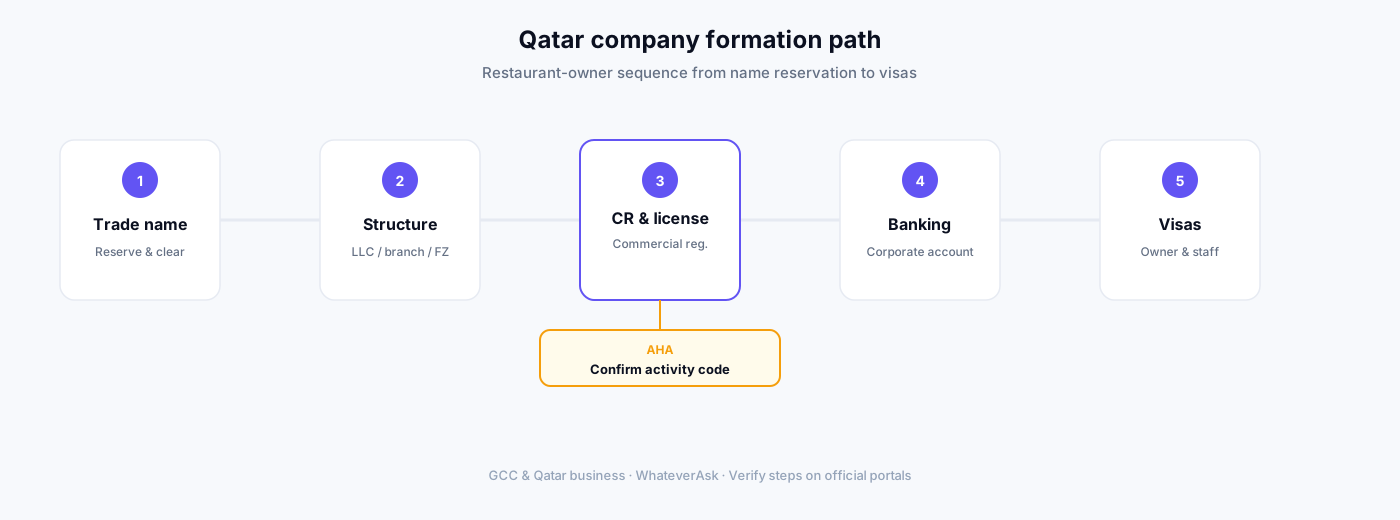
Restaurant License Requirements in Qatar: Activity Codes & Approvals
Map Qatar F&B licensing — commercial registration, trade license, MOPH food establishment registration, municipality, and Civil Defence — before you sign a lease.
- Published
- 2026-05-05
- Last Updated
- 2026-05-05
Quick Answer
A Qatar restaurant is not cleared by a single “restaurant license” stamp. You typically stack:
| Layer | What it proves | Typical channel |
|---|---|---|
| Commercial Registration (CR) | Your company exists and lists food-trade activities | MOCI / Investor Single Window |
| Commercial / trade license (permit) | You may practice listed activities at a specific location | MOCI e-services / Single Window commercial permit services |
| MOPH food-establishment registration | Food safety oversight for the establishment (Watheq ecosystem) | Ministry of Public Health portals / Sharek guidance |
| Municipality / location fitness | Site and signage rules for the unit | Ministry of Municipality processes |
| Civil Defence readiness | Fire and life-safety for the fitted premises | Civil Defence inspection path |
| Food-handler medicals | Individual staff cleared to handle food | Approved medical centers |
⚠️ Verify before you pay. Fees, document lists, and portal names change. Confirm on moci.gov.qa, investor.sw.gov.qa, Hukoomi, and current MOPH food-safety guidance.
Pillar path: How to Start a Restaurant Business in Qatar.
Introduction
Restaurant founders often ask “What license do I need?” expecting one PDF. Regulators ask a different question: Can this company, at this address, safely prepare and serve this menu?
This guide separates the layers so you can brief a PRO, landlord, and fit-out contractor with the same checklist. It is written for restaurant owners — not for pure trading or consulting licenses.
Why Activity Codes Matter for F&B
Your CR and commercial license list activity codes. Those codes must match what you sell and how you operate (dine-in, café, catering, cloud kitchen, etc.).
MOPH food-establishment registration guidance states that the business activity must be registered under the food trade category on a valid commercial registration, and the establishment must be located in Qatar. If your CR says “general trading” or a non-food consultancy code, food registration and banking reviews stall.
Activity mismatches also create renewal pain: inspectors and landlords compare what you practice to what is printed. Fix codes early — changing them mid-fit-out costs rent and redesign time.
Step-by-Step: Map Your License Stack
Step 1 — Inventory what you will actually do
List every revenue line for year one:
- Dine-in / takeaway
- Delivery (own riders vs aggregators)
- Catering off-site
- Retail packaged goods
- Shared kitchen / ghost brand
Each line can imply different activities or add-on approvals. Do not license a café and silently run a catering commissary.
Step 2 — Align CR activities to that inventory
During company formation / CR issuance, select food-related activities that cover the inventory. Keep a written map: *menu category → activity → evidence* (lease use, kitchen type).
Step 3 — Obtain CR, then commercial permit for the site
Investor Single Window FAQs describe commercial permit issuance after commercial registration. Typical attachments referenced in official FAQ material include authorized-person ID, rental agreement, CR copy, and location details; signage applications may require a plate/model within stated size limits. Permits are commonly valid for a defined period (often one year) and must be renewed.
You may only practice activities listed on the permit. Treat “we’ll add it later” as a compliance risk, not a plan.
Step 4 — Register the food establishment with MOPH
Sharek / MOPH guidance for Registration of a Food Establishment (Watheq) lists illustrative required documents such as:
- Copy of commercial registration
- Establishment registration card
- Company stamp and logo copies
- Owner Qatari ID
- Responsibility letter
- For restaurants / factories (additional): trade license, pest-control contract, menu (restaurants), product descriptions (factories), food-safety certificate examples (e.g. HACCP), risk analysis, process flow diagram
Conditions commonly include: establishment in Qatar, valid CR, and food-trade activity on the CR. Published service timing and fee notes should be re-checked on the live Sharek article — treat portal SLAs as estimates.
Step 5 — Prepare for inspection, not just upload
Uploading documents is not the finish line. Inspectors look for a kitchen that matches the story: handwashing, cold chain, finishes, pest control evidence, and staff medicals. Schedule fit-out so the site is inspectable before you burn marketing spend.
Step 6 — Civil Defence and municipality closeouts
Fire drawings, extinguishers, suppression, emergency exits, and gas safety sit on the Civil Defence path. Municipality processes may govern commercial use of the unit and exterior signage. Sequence these with landlord technical approvals in malls.
Step 7 — Staff-level clearances
Food handlers need medical examination / health cards. Build a roster matrix: role → medical status → training → first shift. Opening with uncleared staff creates last-minute chaos.
Step 8 — Calendar renewals
Trade / commercial licenses renew (official FAQs note renewal windows ahead of expiry). Keep lease, CR, and food registration evidence current so renewals are administrative — not emergency.
Framework: CR vs Trade License vs Health
| Artifact | Answers | Fails when… |
|---|---|---|
| CR | Who is the legal entity? Which activities exist on paper? | Activities omit food trade; CR expired |
| Commercial / trade license | Where may those activities be practiced? | Lease/location rejected; activities not listed |
| MOPH food registration | Is this establishment in the food-safety system? | Missing pest contract, menu, or non-food CR category |
| Civil Defence | Is the fitted space safe to occupy for F&B? | Exits, suppression, or gas incomplete |
| Handler medicals | Are the people safe to touch food? | Roster grows faster than medical appointments |
Operating rule: never market “Grand Opening” until CR + site license + food registration readiness + fire readiness are honestly green — or you have a documented soft-open scope that stays inside what is cleared.
Best Practices
- One license binder (digital). CR, lease, commercial license, MOPH proofs, pest contract, menu PDF, Civil Defence letters, staff medical log.
- Menu version control. The menu you upload for registration should match what guests receive in week one.
- Landlord pack early. Malls often need their own technical and brand approvals in parallel with government gates.
- PRO + operator dual ownership. PRO runs portals; operator owns kitchen truth.
- Change control. New cuisine lines, shisha, or catering should trigger an activity / approval check before launch.
- Cite official pages in your project doc. Link the live MOCI / Single Window / Sharek URLs your team used on the date of application.
Common Mistakes
- Treating CR as the restaurant license.
- Licensing only dine-in while running a ghost kitchen under the same brand without checking activity coverage.
- Uploading MOPH files from an unfinished kitchen.
- Forgetting pest-control contracts and menu files called out for restaurants.
- Exterior signage installed before municipality plate approval.
- Letting licenses lapse during a slow season.
- Copying another outlet’s approval list without matching concept risk (factory vs café vs full restaurant).
Practical Examples
Café with bakery display
CR includes café / food service activities; commercial license tied to a street unit; MOPH registration includes menu and pest contract; Civil Defence focuses on LPG and exits; eight food handlers cleared. Delivery added later via aggregators without new kitchen — still confirm whether activity text covers takeaway/delivery.
Full-service restaurant with new hood
Longest pole is Civil Defence + hood commissioning. MOPH inspection scheduled only after cold rooms and finishes are ready. Owner who pre-sold opening gift cards before fire clearance had to refund — license stack was fine on paper, premises were not.
Examples are educational patterns, not guarantees of approval timelines.
Action Checklist
- [ ] Year-one revenue lines listed
- [ ] Target activity codes mapped to each line
- [ ] CR issued/valid with food-trade category
- [ ] Lease pack ready for commercial permit application
- [ ] Commercial / trade license issued for the exact unit
- [ ] MOPH food-establishment document set assembled (incl. pest + menu)
- [ ] Kitchen inspectable date on the project plan
- [ ] Civil Defence package owned by fit-out lead
- [ ] Signage permit path confirmed if exterior brand goes up
- [ ] Food-handler medical tracker live
- [ ] Renewal dates in calendar (CR, license, contracts)
- [ ] Cross-check budget in cost guide
Frequently Asked Questions
Is a commercial registration enough to open a restaurant?
No. CR establishes the company and activities. You still need the site commercial / trade license, MOPH food-establishment registration, and typically fire / municipality closeouts before public service.
What documents does MOPH ask for?
Published Sharek guidance for food-establishment registration lists CR, establishment card, stamp/logo, owner QID, responsibility letter, and additional restaurant items such as trade license, pest-control contract, and menu — plus deeper food-safety documents for higher-risk operations. Always re-check the live article before filing.
How long is a commercial permit valid?
Official Investor Single Window FAQ material describes commercial permits as valid for a period of one year (confirm on the live FAQ when you apply) and outlines electronic issuance after CR.
Can I operate activities not listed on my license?
No. Official FAQ guidance states only activities listed on the commercial permit may be practiced. Add activities through the proper amendment process before launch.
Do cloud kitchens need the same stack?
They still need entity, site licensing, and food-safety registration appropriate to a food establishment at that address. “Delivery only” does not remove kitchen oversight.
Where do I apply?
Company and commercial license services are commonly handled via MOCI electronic services and the Investor Single Window. Food-establishment registration runs through MOPH digital channels referenced on Sharek. Bookmark the official URLs rather than third-party mirrors.
Conclusion
Restaurant licensing in Qatar is a stack: entity activities, site permit, food-safety registration, and premises safety. Master activity codes first, then lease, then inspections. When every layer answers a clear question, PRO work gets faster and opening dates stop slipping.
Continue with the start guide for sequencing, and the cost guide for cash planning.
Sources (verify current pages): MOCI commercial license FAQs; Investor Single Window commercial permit FAQs; MOPH / Sharek “Registration of a Food Establishment” (Watheq) article.