Restaurant Closing Checklist: End-of-Night FOH, BOH & Manager Reset
A role-split restaurant closing checklist for FOH, BOH, and managers — food-safety temps, FIFO, cash, lock-up, morning handoff, and where AI can assist close rituals without owning food safety or cash.
- Published
- 2026-07-27
- Last Updated
- 2026-07-27
Executive Summary
A restaurant closing checklist is not the opening checklist run backwards. Close has three jobs:
| Job | Owner | Outcome |
|---|---|---|
| Reset the floor | FOH lead | Dining room ready for tomorrow’s open |
| Secure the kitchen | BOH / kitchen lead | Food safe, stations broken down, records complete |
| Lock the business | Manager / closing PIC | Cash reconciled, doors locked, morning handoff clear |
Independents who hand one tired closer a single “close the restaurant” sheet routinely skip cooler temps, FIFO storage, or lock-up. Split accountability. Run the Close-Reset Loop. Leave the next shift a clean start — then use the separate restaurant opening checklist in the morning.
⚠️ Educational only. Food-safety, hygiene, and security requirements are jurisdiction-specific (including Qatar Clean / MoPH expectations). Confirm with your local health authority and insurer. This is not legal or inspection advice.
Introduction
End-of-night failure looks quiet: lights off, doors locked, one person rushing for the last taxi. The debt shows up at open — warm coolers, sticky floors, missing float, unread notes, and a guest who sits at a dirty table before anyone notices.
This guide is close-only. It does not rewrite launch readiness or daily open. Those live on the opening checklist. Mid-shift / rush-handover checklists are a different ritual and stay out of scope here.
For the full systems map, start at the restaurant operations pillar. Turn each close line into a trainable procedure with the restaurant SOP guide.
Why This Matters
A written restaurant closing checklist protects:
- Food safety — cold holding logged, leftovers labeled, chemicals stored, hand-sink areas left usable
- Guest experience debt — sticky floors and dirty restrooms become tomorrow’s first impression
- Cash integrity — drawer close, tip-outs, and deposit paths before anyone leaves
- Security — exits, safes, alarms, and keys accounted for
- Shift continuity — opening lead inherits facts, not archaeology
Operator lesson (EXP-006)
When one person owns “everything,” critical lines compete under fatigue. Industry-standard closes split FOH / BOH / manager accountability; Qatar Clean / MoPH-aware operations reinforce daily hygiene, temperature, and training records that must survive the next morning’s open. Three accountable lists plus a manager walkthrough before anyone leaves beats a heroic closer every time.
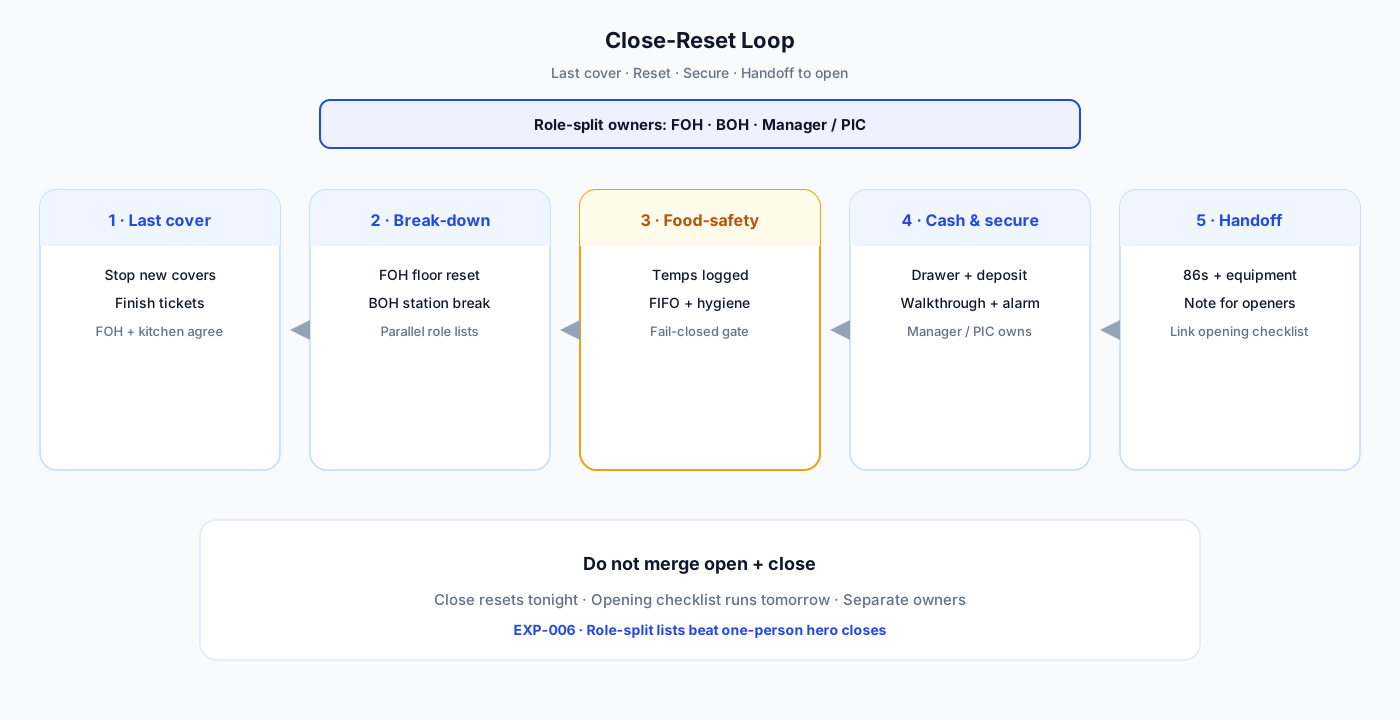
Framework: The Close-Reset Loop
Treat close as a five-stage loop, not a random chore dump.
| Stage | Name | Purpose | Gate |
|---|---|---|---|
| 1 | Last cover | Stop new covers cleanly; finish in-progress tickets | Kitchen + FOH agree “last order” |
| 2 | Break-down | Parallel FOH reset + BOH breakdown | Role lists started with named owners |
| 3 | Food-safety lock | Temps, FIFO, hygiene records | Fail-closed if out of range |
| 4 | Cash & security | Drawer, deposit, walkthrough, alarm | Manager / PIC owns |
| 5 | Morning handoff | Note, 86s, equipment flags → open ritual | Link to opening checklist |
Shared rules
- Every line is observable (done / not done) — no vague “kitchen good.”
- One named owner per role list; initials or signature required.
- Fail-closed on food safety and cash — out-of-range temp or missing deposit = escalate, do not leave.
- Do not merge open and close onto one page — different cadence, different owners, different failure modes.
- Map checklist lines to SOPs; the checklist confirms *that* it happened, SOPs teach *how*.
Last cover → Break-down (FOH ‖ BOH) → Food-safety lock → Cash & security → Morning handoff → [Open]Step-by-Step Guide
Part A — FOH closing playbook
Assign a FOH closing lead. Start after last cover clears; do not wait until BOH finishes.
| Area | Checks | Done? |
|---|---|---|
| Service stop | Last tickets closed; no open tabs without manager note | ☐ |
| Dining room | Tables wiped/sanitized; chairs up or staged per house rule; floors swept/mopped | ☐ |
| Stations | Condiment caddies cleaned; serverside mise put away; side stations restocked for open | ☐ |
| Menus & guest tools | Menus wiped; QR/table tents current; highchairs/booster seats sanitized | ☐ |
| Restrooms | Restrooms cleaned/stocked; trash emptied; lights left per SOP | ☐ |
| Front of house trash | Trash/recycling out; dirty linen bagged; lobby/entrance glass wiped | ☐ |
| Atmosphere | Music off; HVAC setback per SOP; exterior furniture secured if used | ☐ |
| FOH sign-off | Lead initials; exceptions noted for manager | ☐ |
Part B — BOH closing playbook
Assign a kitchen / BOH closing lead. Food-safety lines stay at the top.
| Area | Checks | Done? |
|---|---|---|
| Hot line | Equipment cooled/cleaned per SOP; fryers filtered/covered as required | ☐ |
| Cold holding | Cooler/freezer temps logged; doors sealed; out-of-range escalated | ☐ |
| FIFO & leftovers | Leftovers labeled (item, date/time, initials); FIFO rotation; discard expired | ☐ |
| Prep & stations | Boards/knives sanitized; stations broken down; smallwares washed or soaking per SOP | ☐ |
| Dish / warewash | Machine cleaned; chemicals checked; clean/dirty path left clear for morning | ☐ |
| Hygiene records | Daily hygiene / cleaning checklist complete where required | ☐ |
| Pest / dry storage | Dry goods sealed; floors clear under racks; pest evidence noted | ☐ |
| BOH trash & linen | Trash out; compost/oil disposal per local rule; linen staged | ☐ |
| BOH sign-off | Lead initials; equipment flags written for open | ☐ |
Part C — Manager / PIC closing playbook
The manager (or person-in-charge) owns cash, security, and the handoff — even when FOH/BOH leads run their lists.
| Area | Checks | Done? |
|---|---|---|
| Walkthrough | FOH + BOH lists reviewed; open exceptions owned | ☐ |
| Cash & POS | Drawer counted vs report; tips settled; voids/comps reviewed; POS closed/batched | ☐ |
| Deposit / safe | Deposit prepared per SOP; safe locked; keys accounted | ☐ |
| Security | Exits/windows checked; office locked; cameras/DVR as applicable; alarm set | ☐ |
| Staff exit | Roster departure logged; no one left alone against house policy | ☐ |
| Handoff note | 86s, equipment issues, VIP notes, deliveries for morning written | ☐ |
| Manager sign-off | PIC initials; building secured | ☐ |
Condensed end-of-night sequence
- Call last cover / last order with kitchen.
- Start FOH reset and BOH breakdown in parallel.
- Complete food-safety lock (temps + FIFO + hygiene records).
- Manager walkthrough + cash/security.
- Write morning handoff; set alarm; leave.
Food-Safety Block (Temps, FIFO, Hygiene Records)
Keep this block fail-closed. Adapt forms to your local authority; do not skip the intent.
| Control | Close action | Record |
|---|---|---|
| Cold holding | Log cooler/freezer temps at close | Temp log with time + initials |
| Hot holding / cool-down | Confirm cool-down path for leftovers that will be held | Discard or label per SOP |
| FIFO | Rotate; newest behind oldest; seal containers | Date/time labels |
| Allergens / cross-contact | Separate storage; clean boards/tools before leave | Note any allergen 86s for open |
| Chemicals | Stored away from food; bottles labeled | Visual check |
| Hygiene / cleaning | Daily cleaning checklist complete | Hygiene record retained per local rule |
| Hand sinks | Stocked or flagged for morning restock | Exception on handoff note |
Qatar Clean / MoPH-aware operators should treat daily temperature and hygiene records as assets the morning shift inherits — not paperwork to invent after an inspection scare. If a reading is out of range, escalate and correct before lock-up; do not “fix tomorrow.”
Cash, Lock-Up & Security Walkthrough
| Step | Owner | Done? |
|---|---|---|
| Close all open checks / investigate leftovers | Manager | ☐ |
| Count drawer against POS; investigate variance | Manager | ☐ |
| Settle tips / server checkout | Manager + FOH lead | ☐ |
| Prepare deposit; dual-control if policy requires | Manager | ☐ |
| Secure safe, office, liquor (if applicable) | Manager | ☐ |
| Walk perimeter: exits, windows, restrooms, storage | Manager | ☐ |
| Confirm keys / FOBs returned | Manager | ☐ |
| Set alarm; verify signal if monitored | Manager | ☐ |
Cash and lock-up are manager work. Delegating the count to a closer who also mops invites both theft risk and honest error under fatigue.
Handoff to Open (Without Duplicating Open)
Close ends when the morning can open without guessing.
Write a short handoff (whiteboard, logbook, or digital note):
- 86 list and expected first deliveries
- Equipment that failed or needs service
- Food-safety exceptions (what was discarded / what needs first check)
- Staffing notes for the opening lead
- Any guest complaints unresolved
Then stop. Do not paste the daily opening checklist here. Openers run the restaurant opening checklist. Systems map: restaurant operations. Procedure depth: restaurant SOP guide. Training: restaurant staff training.
AI Close-Out Assist (Ops → AI Bridge)
Bridge only. This section answers “Can AI help with restaurant closing checklists?” without turning close into a product pitch or inventing a second “AI closing checklist” page. Role-split lists and the Close-Reset Loop stay the authority. AI assists the ritual — it does not own food-safety judgment, cash reconciliation, or lock-up accountability.
Operator situation (why this bridge exists)
Closers already know the lists. What breaks at 1 a.m. is attention under fatigue: a skipped temp line, a vague handoff (“kitchen was fine”), or an exception that never reaches the opening lead. Buying an “AI closing” tool before the Close-Reset Loop is trained usually automates the same skips. Diagnose the close first (EXP-006). Diagnose where weekly hours go before tool-first AI (EXP-002). Then use AI only where it protects the ritual.
Framework: The Close-Assist Triangle
Treat AI close-out help as three assist lanes on top of the existing loop — never a replacement for FOH / BOH / manager ownership.
| Lane | What AI may assist | What stays human |
|---|---|---|
| 1. Ritual prompts | Sequence reminders by role; nudge incomplete observable lines; surface “who owns this list tonight” | Naming owners on the schedule; calling last cover; physical reset quality |
| 2. Handoff notes | Structure the morning note (86s · equipment · food-safety exceptions · staffing) from checked exceptions | Deciding what matters for open; guest-complaint judgment; tone of the note |
| 3. Exception flags | Flag missing temp logs, unsigned role lists, cash variance fields left blank, or equipment flags with no owner | Fail-closed escalation; discard decisions; cash investigation; whether the building can lock |
Close-Reset Loop (human ownership)
        ↓
Close-Assist Triangle (optional AI assist)
  Ritual prompts ‖ Handoff structure ‖ Exception flags
        ↓
Morning open still runs the opening checklist (human)
Shared rules for the triangle
- AI may remind, structure, and flag — it may not “approve” food safety or cash.
- Every flagged exception still needs a named human owner before lock-up.
- If the Close-Reset Loop is not trained, fix the lists first — do not buy close automation as a substitute.
- Link forward to the Restaurant AI hub and how restaurant owners save time with AI for the broader hours/workflow diagnosis — this page stays close-only.
- NeuroPOS (or any POS) is evidence of shared digital records when you already use one — not a requirement to close well, and not advertising here.
Practical playbook — this week
| Step | Action | Done? |
|---|---|---|
| A | Confirm FOH / BOH / manager lists exist and owners are named for tonight’s close | ☐ |
| B | Pick one assist lane only (usually exception flags or handoff structure) — not all three at once | ☐ |
| C | Define the exception list AI may flag: missing temp log · unsigned role list · blank cash variance · unsigned equipment flag | ☐ |
| D | Require a human initials / escalate path for every flag before alarm set | ☐ |
| E | Template the morning handoff fields; ban vague “kitchen good” completions | ☐ |
| F | After seven closes, review which flags were real vs noise; tighten before adding ritual prompts | ☐ |
| G | If you want the wider “where AI saves owner hours” frame, read Episode 1 — do not expand this page into a general AI guide | ☐ |
What AI must never own at close
- Out-of-range temperature disposition (discard vs hold vs escalate)
- Cash investigation and deposit custody
- Final security walkthrough and alarm set confirmation
- Guest-complaint or VIP judgment left for morning
- “Mark all complete” bulk sign-off without observable checks
Bridge links (authority journey)
- Ops map: Restaurant Operations · ops hub: Restaurant Operations hub
- Morning sibling: Restaurant Opening Checklist
- AI cluster entry: Restaurant AI hub
- Hours / never-automate hospitality guard: How restaurant owners save time with AI
Do not create or link a parallel /…/ai-restaurant-closing-checklist URL. Close authority stays here.
Best Practices
- Name FOH, BOH, and manager owners on the schedule for every close — not “whoever is last.”
- Time-box close after last cover so overtime does not erase the ritual.
- Print or tablet at station — buried Drive folders do not get used at 1 a.m.
- Photo evidence for critical food-safety or security lines where useful for training.
- Review skipped lines weekly — fix the SOP or remove dead lines.
- Pair with open — yesterday’s incomplete close is today’s emergency open.
- Keep mid-shift separate — rush handover is not end-of-night close.
- Add AI assist only after lists are trained — one Close-Assist Triangle lane at a time; never auto-approve food safety or cash.
Common Mistakes
- One-person close sheet — FOH, BOH, and cash compete; food safety loses (EXP-006).
- Skipping temp logs because “coolers look fine” — inspections and morning opens disagree.
- Merging open + close onto one document — launch/open items clutter close and get skipped.
- Leaving cash to “tomorrow’s manager” — variances compound; accountability vanishes.
- No written handoff — openers inherit mysteries instead of a plan.
- Cleaning before food is secured — FIFO and labeling get skipped under mop pressure.
- Alarm set while someone is still in the building — or worse, not set at all.
- Buying “AI closing” before the Close-Reset Loop works — automates skips and vague handoffs (EXP-002).
- Letting AI bulk-complete the checklist — removes observable ownership the morning still needs.
Practical Examples
Example A — Independent full-service (two closers + PIC) FOH lead owns dining room/restrooms; cook owns BOH + temp log; PIC owns cash/walkthrough. Close-Reset Loop finishes in ~45–75 minutes after last cover when lists are trained.
Example B — QSR / counter service Collapse FOH surface area; expand assembly, drive-thru, and lobby trash lines. Keep food-safety lock and manager cash/security intact.
Example C — Soft-open week Require ≥95% close completion for three consecutive services before public launch volume — same discipline the opening checklist asks of open readiness.
Example D — Close-Assist Triangle (after lists are stable) Week 1: exception flags only (missing temp log / unsigned lists). Week 2: structured handoff fields from those flags. Week 3+: optional ritual prompts. Human PIC still owns every fail-closed decision.
Action Checklist
- [ ] Publish three role lists: FOH, BOH, Manager/PIC
- [ ] Name owners on every scheduled close
- [ ] Put temps, FIFO, and hygiene records in a fail-closed food-safety lock
- [ ] Keep cash + lock-up on the manager list only
- [ ] Require a written morning handoff note
- [ ] Link openers to the opening checklist — do not duplicate it
- [ ] Align each line to an SOP or training sign-off
- [ ] Review skipped lines after one week; fix or remove
- [ ] Cross-link restaurant operations and staff training
- [ ] (Bridge) After lists are trusted, add one Close-Assist Triangle lane — exception flags or handoff structure first
- [ ] (Bridge) Ban AI bulk-complete / auto-approve on food safety and cash
- [ ] (Bridge) When ready for the wider AI hours frame, read Episode 1 via the AI hub
Frequently Asked Questions
What’s the difference between a restaurant closing checklist and an opening checklist?
Closing resets and secures the business after last cover. Opening proves *today’s* shift can serve. Different owners, different failure modes — keep them on separate pages and link them.
Who should own FOH vs BOH vs manager close tasks?
A FOH lead owns floor reset; a kitchen lead owns BOH breakdown and food-safety logs; a manager/PIC owns cash, security, and the final walkthrough. One person may wear two hats in a tiny team — the lists still stay separate so nothing is silently dropped.
What food-safety steps must happen before lock-up?
At minimum: cold-holding temps logged, leftovers labeled with FIFO discipline, cleaning/hygiene records complete, chemicals stored correctly, and out-of-range issues escalated before anyone leaves.
How do I handle cash and deposit at close?
Count the drawer against the POS, settle tips, prepare the deposit per house SOP, lock the safe, and record variances the same night. Do not leave cash reconciliation for the morning except as a documented dual-control exception.
Should open and close live on one checklist?
No. Combined sheets get skimmed under fatigue. Use this close guide at night and the opening checklist in the morning.
What belongs in a mid-shift checklist instead?
Rush handover, station reset between peaks, and partial 86 updates — not full lock-up, deposit, or alarm. Mid-shift is a different Knowledge Product and should not be bolted onto end-of-night close.
Can AI help with restaurant closing checklists?
Yes — as assist, not ownership. Use the Close-Assist Triangle: ritual prompts, structured handoff notes, and exception flags on top of role-split lists. AI must not approve food-safety disposition, cash investigation, or lock-up. Train the Close-Reset Loop first; then add one assist lane. For the broader “where AI saves owner hours” diagnosis, continue at the Restaurant AI hub and Episode 1 — do not expect a separate AI-closing URL.
Related Guides
- Restaurant Opening Checklist — Launch readiness and daily open (morning sibling)
- Restaurant Operations — Full ops stack map
- Restaurant Operations hub — Ops discovery lane (should surface this closing guide)
- Restaurant SOP Guide — Turn close lines into trainable procedures
- Restaurant Staff Training — Train closers to the lists
- Employee Handbook for Restaurants — Attendance and closing expectations
- Common Restaurant Mistakes — First-year ops failure patterns
- Restaurant AI hub — AI-ops cluster entry (bridge only)
- How restaurant owners save time with AI — Hours diagnosis + never-automate hospitality (bridge only)
- Restaurant Knowledge Hub — Full Restaurant lane
- About WhateverAsk — Editorial standards behind these checklists
Strategic Meaning & Business Value
What this means for restaurant operators
Operational value. A closing checklist only works when ownership is visible under fatigue. Role-split lists plus the Close-Reset Loop turn “close the restaurant” into observable work. The Close-Assist Triangle then protects the ritual — prompts, structured handoffs, exception flags — without letting software pretend it locked the building.
Customer value. Guests experience last night’s close as this morning’s first impression: clean tables, cold product, staff who know the 86s. A vague or skipped close becomes tomorrow’s slow open and quiet guest distrust.
Financial / growth value. Incomplete closes tax food cost (unlabeled leftovers), cash integrity, overtime, and morning labor spent reconstructing the night. AI that auto-completes lines without ownership often increases that tax. AI that flags missing fail-closed steps before the alarm is set protects margin without buying a second “AI closing” product page.
Strategic value. This page stays on the Restaurant Operations → Optimization → Automation → AI Operations journey. Authority for *how* to close remains Ops. Authority for *where AI may assist close* is a Layer C bridge into the AI-ops cluster — via the AI hub and Episode 1 — not a competing URL. NeuroPOS or any shared digital log is evidence that exceptions can be recorded; it is not the story of this page.
End-of-night close is not a motivational poster. It is whether food stays safe, cash stays owned, and morning inherits facts — every night.
Conclusion
A restaurant closing checklist works when it is role-split, fail-closed on food safety and cash, and explicit about morning handoff. Run the Close-Reset Loop from last cover to lock-up. Cite the lesson behind it: single-sheet closes collapse under fatigue (EXP-006). When the lists are trusted, add one Close-Assist Triangle lane — remind, structure, flag — and keep judgment human (EXP-002). Leave openers a clean building — then let them run their own open ritual. Continue into AI-ops only through the Restaurant AI hub and Episode 1, not a parallel AI-closing page.
Last Updated
Shipped editorial dates (live): Published / Last Updated 2026-07-27 — do not bump until this bridge UPDATE ships (WHA-305). Draft research note: Bridge section drafted 2026-08-16 for WHA-625 Review Package — not live. Educational closing checklist for operators. Not legal, health-code, security, or AI-vendor advice. Verify local food-safety and security requirements with your authorities and insurer.