Common Restaurant Mistakes New Owners Make (and How to Avoid Them)
Avoid the most common restaurant mistakes in year one — weak documentation, rushed hiring, no training system, poor daily ops, and ignoring guest feedback loops.
- Published
- 2026-06-09
- Last Updated
- 2026-06-09
Executive Summary
Most first-year restaurant pain comes from missing systems, not a single dramatic failure. The common restaurant mistakes that show up again and again:
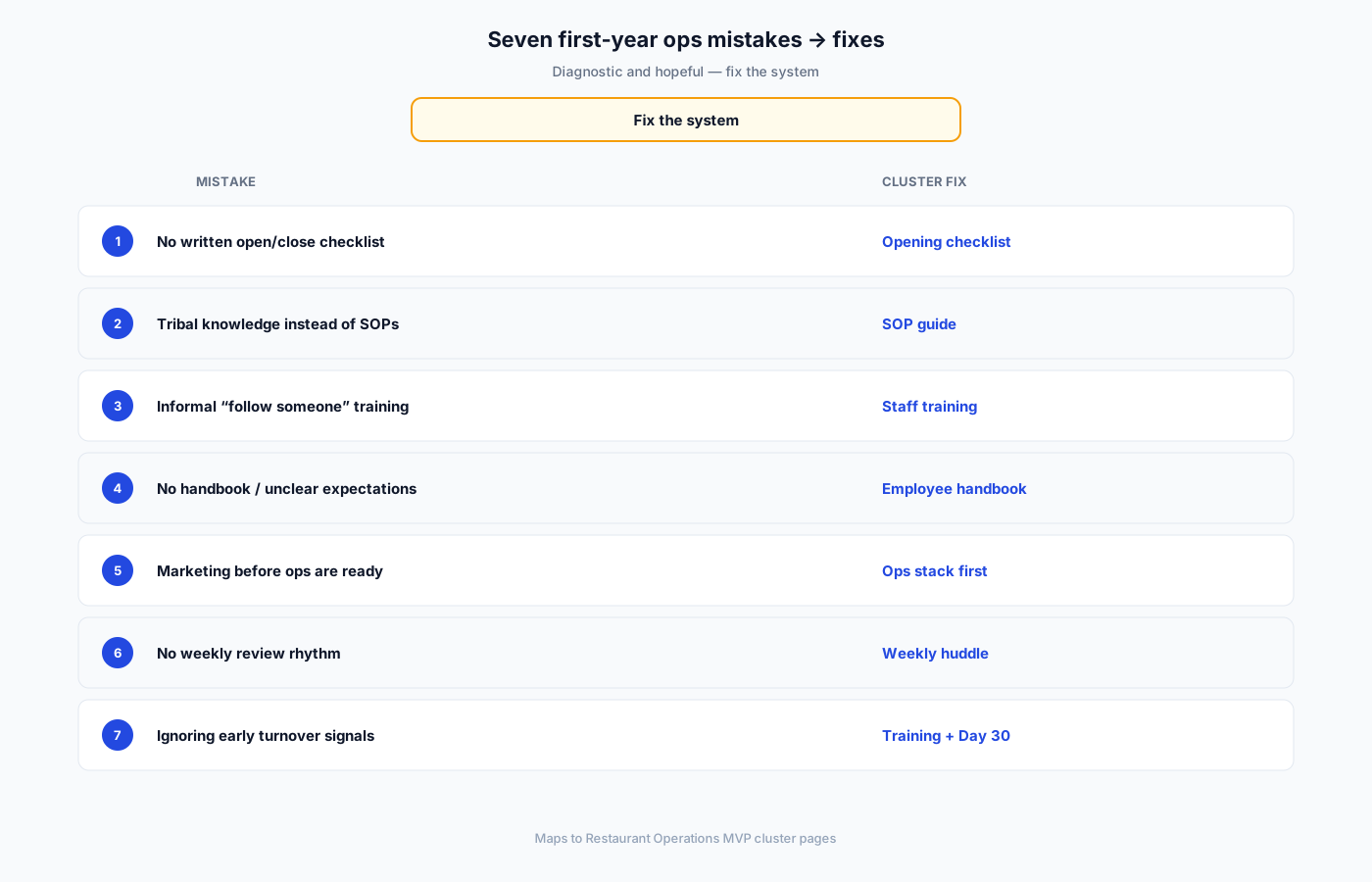
- Opening without a real checklist → Opening Checklist
- No written SOPs → SOP Guide
- Hiring before roles and handbook exist → Handbook + Training
- Training by shadowing only (no sign-off) → Staff Training
- Ignoring closing discipline → SOP Guide
- No weekly ops review → Restaurant Operations
- Confusing marketing launch with ops readiness → Opening Checklist
Fix the system behind each mistake. Do not chase trends while basics are broken.
⚠️ Citation note. Industry “failure rate” headlines are often oversimplified and poorly sourced. This guide focuses on operational patterns operators can control — not sensational statistics.
Introduction
First-year restaurant owner mistakes are predictable. The same gaps appear in independents across concepts and cities: undocumented work, rushed hiring, verbal-only training, weak closes, and no habit of weekly improvement.
This page is not “failure porn.” Each mistake includes what it looks like, why it happens, and a concrete fix that maps into the Restaurant Operations cluster. Use it as a diagnostic, then deepen on the linked guides.
Why This Matters
Restaurant margins are thin. Operational mistakes compound:
| Pressure | What weak ops does |
|---|---|
| Labor | Overtime from chaos; rework from errors |
| Food cost | Waste from poor prep/close; comps from inconsistency |
| Reviews | Guests experience variance as “bad restaurant” |
| Owner health | Heroics replace systems; burnout follows |
| Team morale | Unclear standards feel like unfair management |
Good food helps. It does not permanently overcome weak operations. Guests forgive an off night; they do not forgive a different restaurant every visit.
Step-by-Step Guide: Seven Ops Mistakes and Fixes
Mistake 1 — Opening without a checklist
What it looks like: Coolers not logged, POS untested, staff arriving as guests do, marketing live while stations are incomplete. Why it happens: Optimism and time pressure; “we’ll figure it out on the day.” Fix: Separate launch and daily open checklists; name a checklist owner. Go deeper: Restaurant Opening Checklist
Mistake 2 — No SOPs (tribal knowledge only)
What it looks like: Every cook plates differently; every closer leaves a different mess; managers answer the same questions hourly. Why it happens: Writing feels slow; owners undervalue documentation until turnover hits. Fix: Write 5–7 one-page SOPs for open, close, ticket flow, cash, and critical food safety. Go deeper: Restaurant SOP Guide
Mistake 3 — Hiring before handbook and role clarity
What it looks like: “Just hire bodies”; disputes about attendance and phones; no shared guest standard. Why it happens: Labor shortage panic; handbook feels like “HR corporate stuff.” Fix: One-page role map + short handbook outline + acknowledgment before floor work. Go deeper: Employee Handbook for Restaurants · Staff Training
Mistake 4 — Training without sign-off
What it looks like: “They’ve been here a week” equals “trained”; errors repeat; veterans teach shortcuts. Why it happens: Short staffing; no station checklists. Fix: SOP-based training path with shadow → supervised solo → station sign-off. Go deeper: Restaurant Staff Training
Mistake 5 — Ignoring closing discipline
What it looks like: Food left out, drawers unreconciled, openers spending the first hour fixing yesterday. Why it happens: Fatigue; no closing owner; open checklist exists but close does not. Fix: Closing SOP + signed closing checklist; treat close as part of service, not optional. Go deeper: Restaurant SOP Guide · Opening Checklist (pair with close)
Mistake 6 — No weekly ops review
What it looks like: Same comps and complaints every week; no one owns improvement; owner only reacts to crises. Why it happens: “No time”; meetings feel like bureaucracy. Fix: 15-minute weekly huddle: top issues, one fix, owner for the fix, check next week. Go deeper: Restaurant Operations
Mistake 7 — Marketing launch before ops readiness
What it looks like: Full dining room on day one; kitchen drowning; early one-star reviews that linger. Why it happens: Pressure to “go viral”; confusing awareness with readiness. Fix: Soft open until open/close are boring; hold public push until launch checklist is green. Go deeper: Restaurant Opening Checklist
Framework: Mistake → Fix Map
Use this map to diagnose first-year ops failures. Each mistake has a primary fix layer in the ops stack.
| Mistake pattern | What it looks like | Primary fix |
|---|---|---|
| 1. No written open/close | Owner is the only person who “knows” | Opening checklist |
| 2. Training without SOPs | Every trainer teaches a different restaurant | SOP library |
| 3. Hiring before roles exist | New hires invent the job | Role map + handbook |
| 4. Soft open without ops | Marketing ahead of systems | Freeze volume; finish checklists/SOPs |
| 5. Ignoring closing quality | Dangerous/messy opens | Closing SOP + signed checklist |
| 6. No weekly review loop | Same comps repeat for weeks | 15-minute huddle + reason codes |
| 7. Copying chain complexity | Binders nobody reads | Short, station-visible docs only |
Stabilize in order: checklists → SOPs → training → handbook → weekly review. Marketing cannot fix a missing layer.
Best Practices — 90-Day Stabilization
Use this as a first-year ops focus, not a fantasy transformation plan.
| Days | Focus |
|---|---|
| 1–30 | Launch + daily open/close checklists live; 5 critical SOPs drafted |
| 31–60 | Training checklists + sign-off for core stations; handbook acknowledged |
| 61–90 | Weekly ops huddle habit; one improvement per week; refresh SOPs after menu tweaks |
Rules of thumb:
- One improvement per week beats a giant “ops project” that never finishes.
- Reduce volume (hours/menu) before you skip training when short-staffed.
- Measure leading indicators: checklist completion, sign-offs, comps, repeat complaints — not vanity follower counts.
Weekly huddle agenda (15 minutes)
- What broke this week? (top 3)
- Which SOP or checklist failed — or is missing?
- One fix we will ship before next huddle
- Owner + due date
- Did last week’s fix stick?
Write the answers on one page. If the huddle becomes a complaint session with no owners, you are not doing ops review — you are venting.
Owner bandwidth rule
If the owner is the only person who can open, close, train, and approve exceptions, the business has a single point of failure. Delegate checklist ownership and station training first. Keep final standards with ownership, not every task.
Common Mistakes (Meta)
Even while fixing the seven above, owners often:
- Chase trends instead of basics — new menu apps before temps are logged.
- Copy big-chain complexity too early — binders nobody reads.
- Blame “lazy staff” for system gaps — people cannot follow standards that do not exist.
- Celebrate soft-open compliments and ignore process breaks — friends are not a stress test.
- Delay documentation until “things calm down” — calm never comes without the docs.
Practical Examples
Example — Mistake 1 in the wild Three openers, three different “opens.” Fix: one daily checklist, one named owner, three shifts of 100% completion before the owner takes a night off.
Example — Mistake 2 in the wild New cook plates the signature dish three ways in one week. Fix: one build SOP at the station + trainer sign-off under rush — not another verbal demo.
Example — Mistake 4 in the wild Influencer night before cash close and allergy protocol are trained. Fix: postpone guest volume; run invitation services until closing and recovery SOPs are signed.
Action Checklist
- [ ] Score your last 30 days against the seven-mistake map
- [ ] Pick the highest-cost mistake and assign one owner this week
- [ ] Install or repair the matching checklist/SOP/training layer
- [ ] Add reason codes to comps/voids for the weekly huddle
- [ ] Block new marketing pushes until open/close completion is stable
- [ ] Re-read the operations pillar stack order
- [ ] Schedule a 90-day stabilization review on the calendar
Frequently Asked Questions
What is the most common mistake new restaurant owners make?
Operationally, opening and running without written daily systems (checklists/SOPs) is among the most common and costly patterns. It makes every other problem harder.
How soon should SOPs be written?
Draft critical SOPs before or during soft open — not “after we stabilize.” Stabilization requires them.
Can good food overcome weak operations?
Temporarily, for some guests. Over weeks, inconsistency in timing, accuracy, and service erodes even strong food. Ops protects the food’s reputation.
How do I know my operations are stabilizing?
Fewer owner fire drills, completed open/close checklists, signed-off stations, and a weekly huddle that closes loops. Guests experience fewer “random” nights.
Should I fix hiring or documentation first?
Document roles and 5–7 SOPs first, then hire and train to them. Hiring into ambiguity multiplies chaos.
What’s a realistic first-year ops focus?
Checklists, critical SOPs, training sign-off, a short handbook, and a weekly review. That is the restaurant operations stack — not a side project.
Related Guides
- Restaurant Operations — Pillar map of the ops stack
- Restaurant Opening Checklist — Launch and daily open
- Restaurant SOP Guide — Procedures that stick
- Restaurant Staff Training — Onboarding with sign-off
- Employee Handbook for Restaurants — Expectations and policies
- How Restaurants Can Get More Customers — Avoid buying volume before systems exist
- Restaurant Knowledge Hub — Ops + Growth lanes
- About WhateverAsk — How we write from operator failure patterns
Conclusion
Common restaurant mistakes in year one are mostly systems gaps. Name the mistake, install the fix, and link it to a living document your team actually uses. Do that for ninety days and you will feel the difference: fewer heroics, more repeatable shifts, and a restaurant that can grow without breaking.
The pattern owners regret most: marketing spend that arrives before open/close and ticket times are stable. Fix the stack first; then scale discovery.
Last Updated
2026-06-09. Educational guide based on generalized operator patterns. Not financial, legal, or health-code advice. Verify local requirements with qualified local authorities and advisors.