
Founder's Journal
The Restaurant People See Before They Ever Walk In
What rebuilding Jeju Snow Salmon’s positioning taught me about menus, websites, reviews, and first impressions
- Published
- 2026-09-05
- Last Updated
- 2026-09-05
- Reading Time
- 9 min read
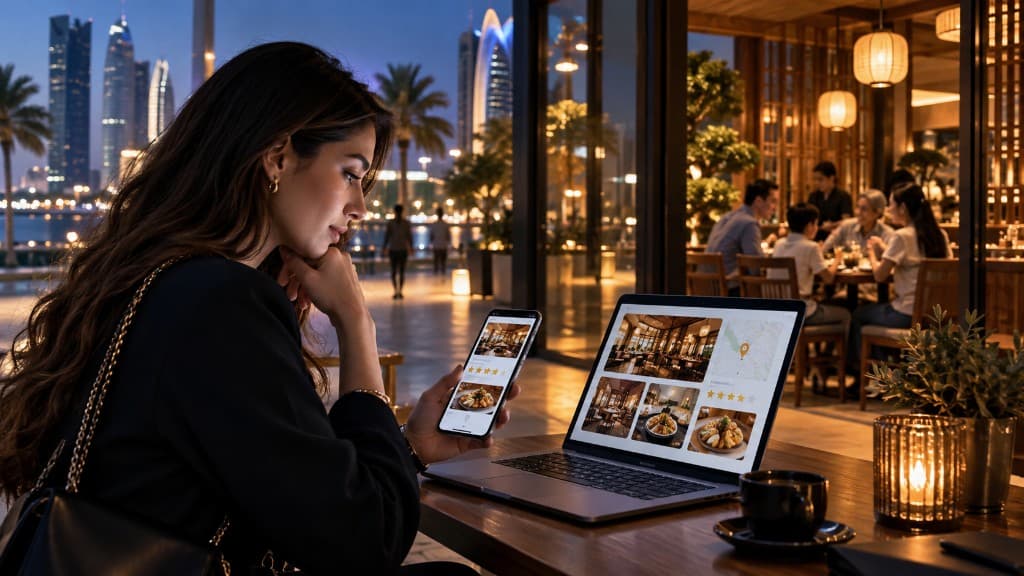
The Restaurant People See Before They Ever Walk In
Before a guest tastes the food, they have already experienced the restaurant.
They have seen the name on Google. They have looked at the photographs. They have scanned the menu, read a few reviews, and formed an opinion about what kind of place it is—and whether it is meant for them.
For a long time, I underestimated how powerful that invisible first visit could be.
When we began operating Jeju Snow Salmon, many people saw the name, the salmon imagery, and parts of the menu and reached a simple conclusion: this must be a sushi or sashimi restaurant. Some guests even asked us directly whether we were essentially another Japanese restaurant.
That interpretation was understandable. Salmon and sushi were visually prominent. Those were some of the easiest signals to recognize from outside. But they did not represent the whole restaurant we were trying to build.
Jeju Snow Salmon was meant to be a place where a family could sit around one table and everyone could find something to enjoy. One person might want salmon or sushi. A child might prefer katsu or udon. Someone else might want bibimbap, a warm Korean dish, or something comforting to share with friends.
The restaurant itself offered that range. But the way we presented the restaurant did not always make it clear.
That gap—between what a business actually is and what people believe it is—became one of the most important operational lessons of our first months.
A Customer Does Not See the Business the Way the Owner Does
As owners, we live inside the business.
We know why the menu was designed in a certain way. We remember the conversations behind each dish. We understand which choices work for children, couples, families, and larger groups. We know the atmosphere we want to create and the experience we hope guests will have.
Customers do not begin with any of that knowledge.
They begin with signals.
A restaurant name. A hero image. The first six menu items. A Google category. A few customer photographs. A sentence in the website header. A review that happens to appear near the top.
From those fragments, they create a complete story in their mind.
If the signals are narrow, the story becomes narrow. If the first screen shows mostly sushi, the restaurant becomes “a sushi place.” If the menu feels difficult to understand, the restaurant feels difficult to choose. If the website does not show families or shared dining, potential family guests may quietly assume the experience is not for them.
The owner may know that the assumption is wrong. But the customer makes the decision before the owner gets a chance to explain.
Positioning Is Not Only a Marketing Exercise
I used to think of positioning mainly as branding: choosing the right words, images, colors, and advertising message.
Operating the restaurant changed that view.
Positioning affects real customer behavior. It influences who clicks, who calls, who visits, what they expect, what they order, and whether the experience matches the promise they saw online.
That makes positioning an operational decision as much as a marketing decision.
If we say that Jeju Snow Salmon is a place for authentic Korean comfort dining, family meals, and group dining, the menu must support that promise. The photography must show more than one narrow product category. The website must make the range understandable. The team must be able to explain the restaurant naturally. Google information, social content, and customer reviews must reinforce the same idea.
The promise and the operation have to agree.
Otherwise, positioning becomes a slogan rather than a real experience.
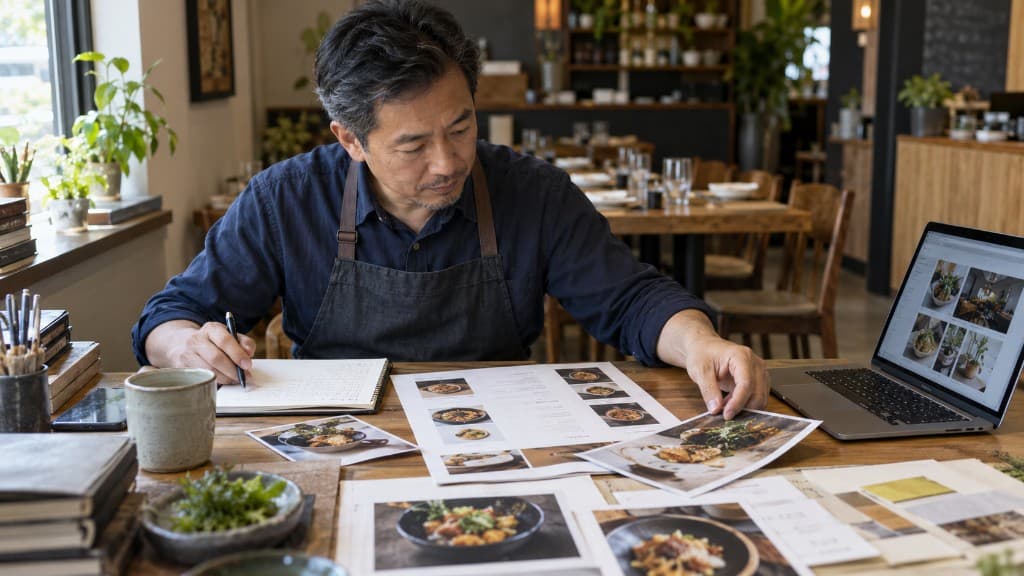
Rebuilding an Impression Takes Time
During the last two or three months, we have worked to broaden the way Jeju Snow Salmon is presented.
We have tried to make the Korean identity clearer. We have placed greater emphasis on family dining and group dining. We have shown that the table can include salmon, katsu, udon, bibimbap, and other Korean comfort dishes—not only sushi or sashimi. We have reconsidered the website, menu presentation, Google presence, photographs, customer-review responses, and the language used across our content.
The change has not come from one campaign or one new headline.
It has come from repeating a more accurate story across many customer touchpoints.
We are beginning to see a different kind of understanding. Conversations are no longer centered only on whether the restaurant is a sushi restaurant. More people can recognize it as a dining option for families, friends, and groups with different preferences.
I do not want to present this as a finished success story or claim that positioning alone solves every growth problem. We are still learning, adjusting, and testing. But the direction of the customer conversation has given us useful evidence that presentation shapes perception—and perception shapes the opportunity to be considered.
The Cost of Correcting the Story
One uncomfortable part of this lesson is realizing how much easier it would have been to address the positioning clearly at the beginning.
When a business launches with an incomplete or misleading impression, correcting it later requires far more than editing a sentence.
The website may need to be redesigned. Menu categories may need to be reorganized. Photographs may need to be selected again. Google information may need to be updated. Social content must repeatedly introduce the broader story. Staff need language that helps them explain the concept consistently. Even existing customer expectations may need time to change.
None of this is impossible. But it consumes time, attention, and operating energy that could have been used elsewhere.
This is not a reason to blame the original decisions. Early-stage businesses rarely begin with perfect clarity. We make choices with limited information, then reality teaches us what those choices actually communicate.
The important part is noticing the gap and being willing to rebuild.
A Menu Is a Positioning System
One of the strongest lessons has been that a menu is not merely a list of products and prices.
It is one of the clearest explanations of what the restaurant believes it is.
Which dishes appear first? Which items receive photographs? How are categories named? Can a family immediately imagine building a meal together? Can a first-time guest understand the difference between signature dishes, comfort meals, sharing options, and individual choices?
If the menu gives visual weight to only one type of food, customers will naturally use that food to define the entire restaurant. If the range is visible but poorly organized, customers may still fail to understand it.
Good menu positioning reduces the amount of explanation required. It helps customers recognize themselves in the choices.
For Jeju Snow Salmon, that means making it easy to see that different people can enjoy one table together. The value is not simply that we offer several dishes. The value is that a family or group does not have to agree on only one narrow preference before choosing the restaurant.
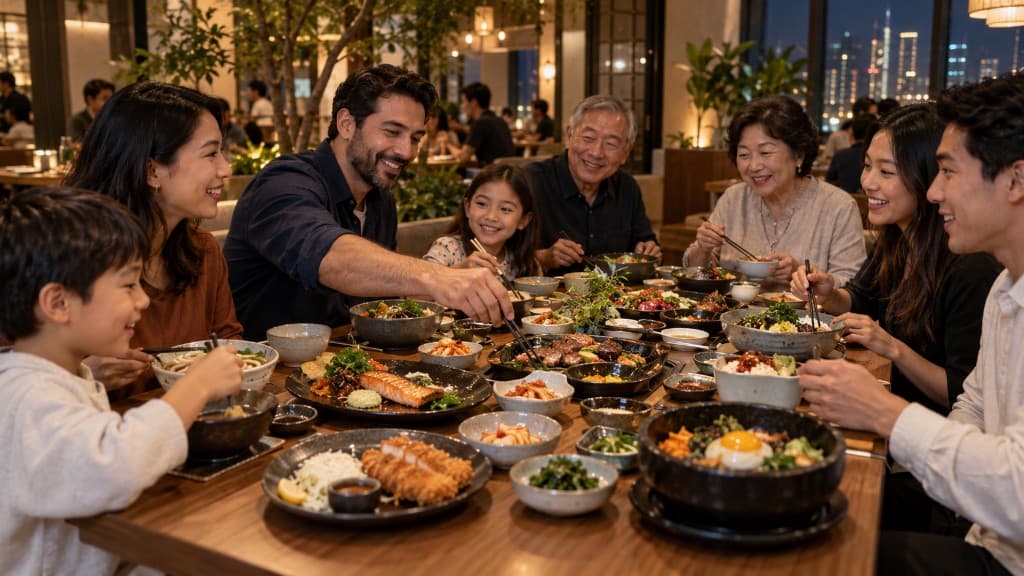
Reviews Do More Than Prove That People Liked the Food
Customer reviews are often treated mainly as reputation scores.
But reviews also teach future guests how to categorize the business.
A review about a family meal signals that the restaurant is suitable for families. A comment about children enjoying katsu or udon expands the picture beyond sushi. A review mentioning a gathering, Korean food, a comfortable atmosphere, or a shared table helps future customers imagine their own visit.
This does not mean trying to control what customers say. It means listening carefully to what genuine customers value and ensuring that the business does not hide those strengths in its own communication.
Review responses can also reinforce context naturally. They can thank guests while reminding readers that the restaurant welcomes families, groups, Korean-food lovers, and guests with different menu preferences. The response should remain personal and truthful; it should not become repetitive keyword advertising.
The goal is consistency, not manipulation.
Every Touchpoint Is Casting a Vote
A restaurant’s positioning is not decided by one brand document.
Every touchpoint casts a vote.
The website votes. The menu votes. Google photographs vote. Reviews vote. Social posts vote. Delivery listings vote. The words used by the service team vote. Even the order in which dishes appear can vote.
If those votes point in different directions, the customer receives a confused picture. If they repeatedly support the same honest identity, the business becomes easier to understand and remember.
For us, the identity we want to make clearer is not “another sushi restaurant.” It is a Korean dining experience where salmon can be one strength without becoming the entire definition—a place where families, couples, and groups can share a table and choose food that fits different tastes.
The Owner’s Responsibility Is to Shape the Right Expectation
This experience has changed how I think about the owner’s job.
Serving good food is essential, but it is not enough to assume that the market will automatically understand what the restaurant represents. The owner has to take responsibility for the expectation created before the guest arrives.
That means repeatedly asking:
- What does a first-time visitor think we are within five seconds?
- Which customers can immediately recognize that this place is for them?
- Does the menu express the same identity as the website?
- Do our reviews and photographs broaden the story or narrow it?
- Are we promising an experience the operation can consistently deliver?
- What incorrect assumption keeps appearing in customer questions?
Those questions should not be asked only at launch. Positioning needs operational review because customer interpretation changes as the business, menu, and market evolve.
What I Would Do Earlier Next Time
If I could return to the beginning, I would spend more time defining not only what the restaurant serves, but how a new customer should understand it.
I would test the website and menu with people who had never heard the explanation. I would ask them what kind of restaurant they believed they were seeing, who they thought it was for, and what occasion would bring them there.
I would look for the difference between our intended identity and their immediate interpretation before investing too deeply in the presentation.
Most importantly, I would treat the menu, website, Google presence, photography, and service language as one connected operating system rather than separate marketing tasks.
We learned this later than I would have liked, and correcting it has taken considerable work. But the lesson is now part of how I think about every business we build:
Customers cannot choose the business you understand internally. They can only choose the business you make visible to them.
The job of positioning is not to create a more impressive story than the truth.
It is to make the full truth easier to see.
Methodology and Data Period
- Entry type
- Founder's Journal reflection (Restaurant Operator Journal · Workflow B)
- Living lab
- Jeju Snow Salmon, The Pearl–Qatar — case source, not promo channel
- Basis
- Firsthand owner observation of how digital signals, menu presentation, and reviews shaped first impressions
- Evidence discipline
- No invented sales, traffic, conversion, ranking, or review-growth metrics; perception shift is operator observation, not a statistically proven result
- Positioning
- Authentic Korean comfort dining for families and groups; salmon is an important strength, not the complete identity; not Japanese-primary or sushi-only
- Visuals
- Three AI-generated editorial illustrations with public captions that retain “Editorial illustration.” Not documentary photographs of the restaurant, customers, interior, or exact menu.
- AI role
- Internal drafting/structuring only — not the story protagonist
- Pipeline
- Not Knowledge Publishing / Golden Rule / knowledgeHubs