
Founder's Journal
We Almost Never Sent a Wrong Order: What Running a Restaurant Taught Me About Operational Accuracy
A restaurant founder on why wrong orders hurt more than one remake — and how a structured ordering workflow at Jeju Snow Salmon made accuracy a systems problem, not a 'be careful' speech.
- Published
- 2026-08-12
- Last Updated
- 2026-08-12
- Reading Time
- 7 min read
What we wanted guests to receive
Before we opened Jeju Snow Salmon at The Pearl, I had a simple aspiration that did not sound strategic at all: I wanted every guest to receive exactly what they ordered.
Not approximately. Not "close enough after we apologise." Exactly — including the modifier someone said once across a noisy room, and the allergy note that matters more than the dish itself.
I had spent years in banking before this. I am comfortable with systems. What unsettled me about restaurants was how many correct-looking steps can still produce a wrong plate if information changes hands informally between people who are all trying hard.
The opening reality nobody romanticises
Opening and operating a restaurant creates many small chances for communication mistakes — especially early, when the team is still learning, menu knowledge is still forming, front-of-house and kitchen habits are still settling, and special requests are easy to miss.
That is not a failure of character. It is the normal physics of a new operation. Verbal relays, free-text notes, and memory-based matching between a plate and a table can work when volume is low and the same two or three people handle everything. They get fragile exactly when you are trying to grow.
One wrong order is not one plate
I used to think of a wrong order as an isolated embarrassment. Operating taught me it is a chain reaction.
A wrong ticket can mean a disappointed guest, a remake, wasted food, a kitchen that loses rhythm, staff who start second-guessing every ticket, slower service for the tables behind that remake, and a quiet drop in trust that does not always show up as a complaint — only as a guest who never quite relaxes with you again.
That is why accuracy is not a soft "hospitality nicety." It is operating economics wearing a guest-facing mask.
The decision we made
We decided not to treat accuracy as a motivational speech. "Be careful" is not a workflow.
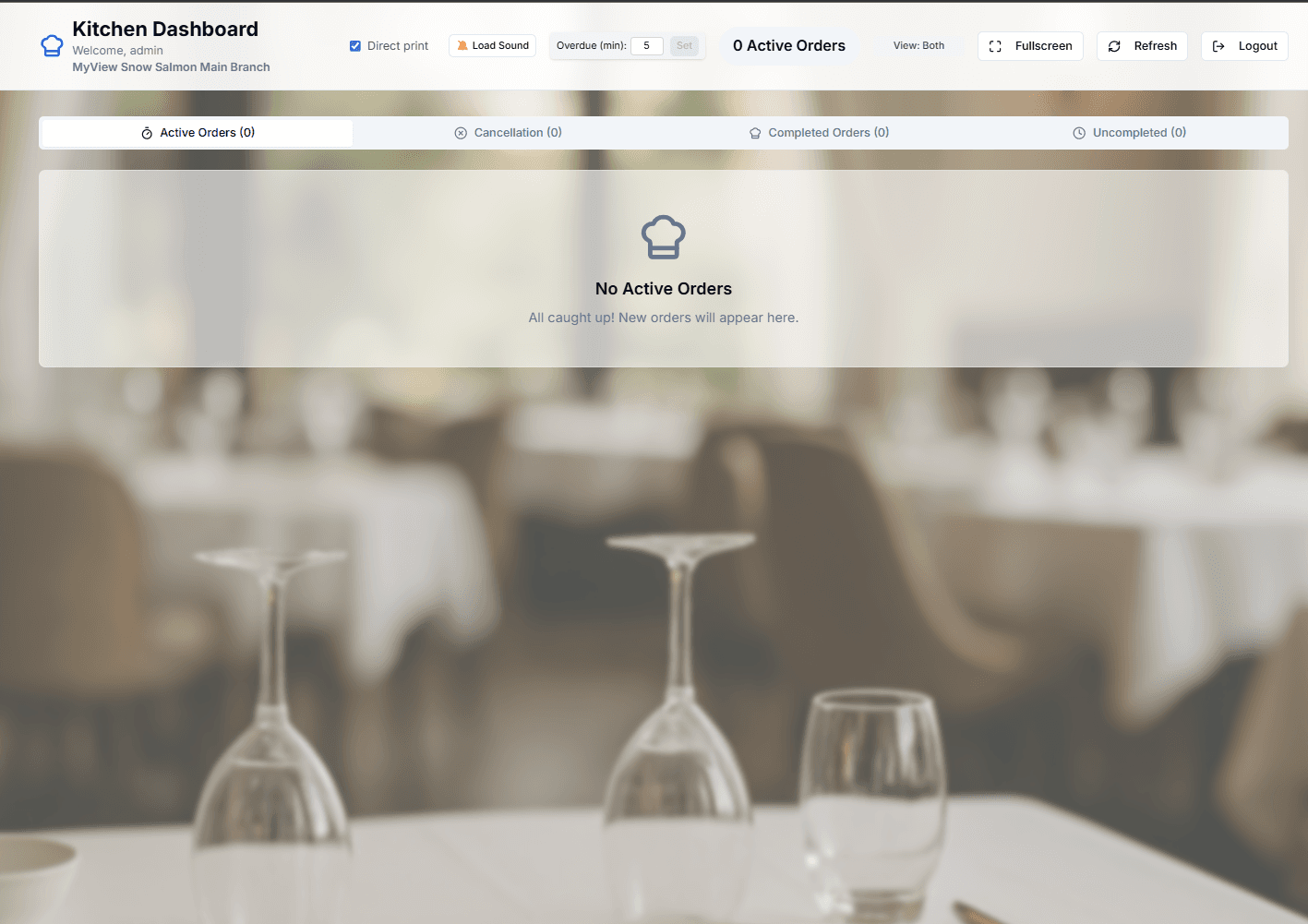
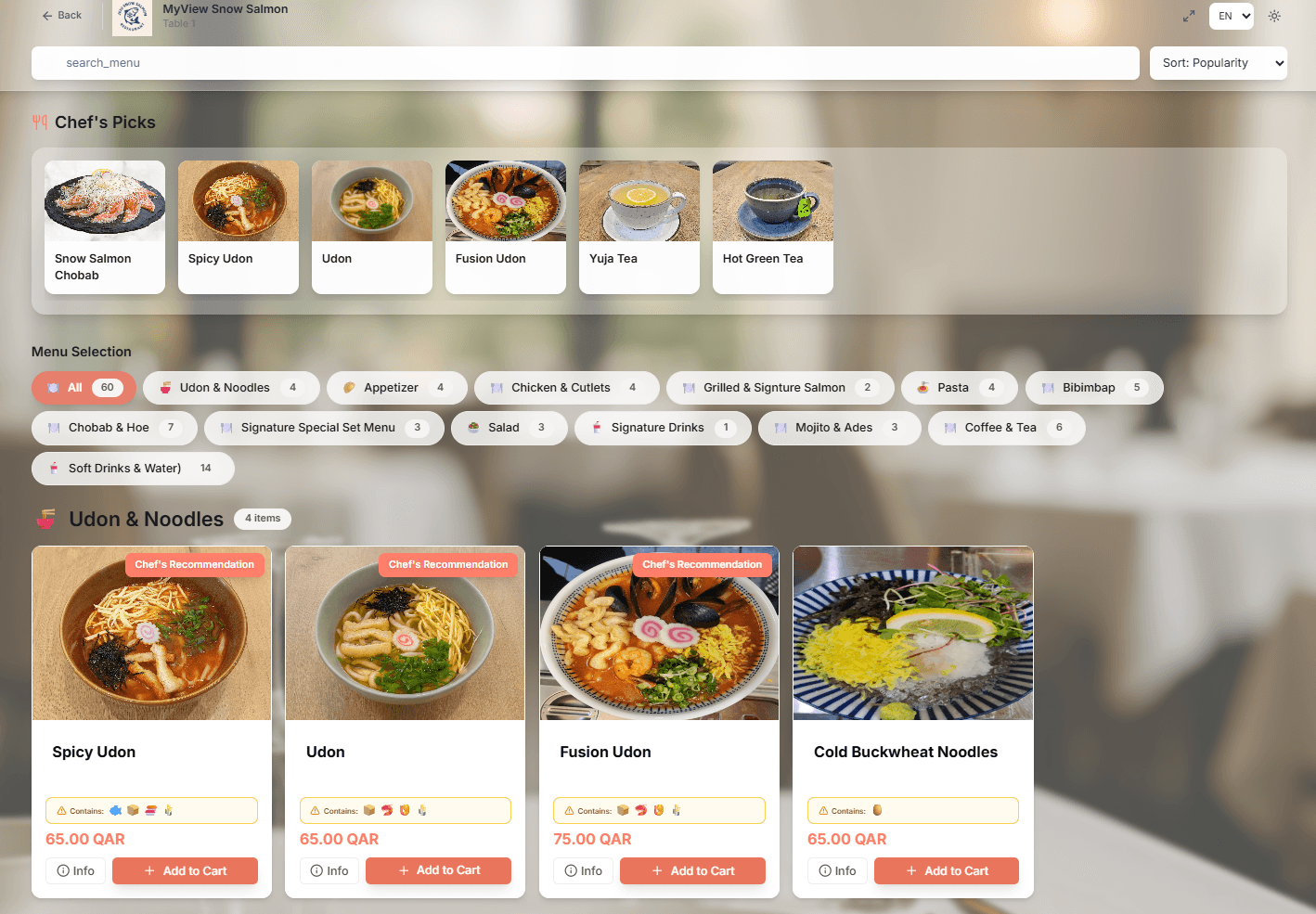
We built a more structured ordering and operating path: capture the order once in structured fields, send that same record to the kitchen without a verbal re-telling, and have the line and the pass check the dish against the original record — not against someone's memory of a conversation.
NeuroPOS is the tool we used in that living-lab workflow. It is not the hero of this story. The decision was the discipline: fewer informal handoffs, one shared source of truth, and less dependence on any single person's shorthand under pressure.
What we observed
In our operating experience at Jeju Snow Salmon, wrong-order incidents have been exceptionally rare — effectively near-zero from the owner's seat. Guests have consistently received the menu items they ordered, including the modifiers we captured at the point of order.
I need to say this carefully: that is an owner observation from running the restaurant, not an independently audited accuracy statistic. I will not invent a percentage to make the story sound more scientific than the evidence I actually have.
What I can stand behind is the qualitative pattern. Remakes became unusual enough to notice as individual events rather than background noise. When something did go wrong, we could usually trace which handoff still had slack — instead of assuming the kitchen "wasn't careful."
The learning
Operational accuracy is created through systems, not through telling people to try harder.
Skill still matters. Hospitality still matters. Judgment still matters. But if the ticket itself can drift between capture and the pass, you will keep paying the same tax — food, time, trust — no matter how good your team is on a calm Tuesday.
The transferable lesson for any owner reading this is not "buy our stack." It is: find every place an order is re-heard, re-typed, or re-remembered, and close those gaps first.
What changed in how I think
I used to treat technology as something you add after the restaurant feels stable. This experience flipped that for me on one narrow point: for repeatable operational knowledge — like how an order must travel — technology is how you turn a lesson into a process the whole team can run on a busy Friday.
That does not mean AI should be the protagonist. People and guests remain the protagonists. Tools exist to reduce friction so humans can cook, serve, and host without fighting their own information flow.
If you want the systems and AI-ops companion to this journal — what already exists in a structured POS workflow versus what intelligence could add next — continue to the Related Resources link: How AI and Restaurant Automation Can Prevent Wrong Orders Before They Reach the Kitchen.
Strategic Meaning & Value
Why does this matter beyond one restaurant's pride?
Order accuracy protects more than a single plate. Fewer remakes mean less waste. Less kitchen disruption means steadier pace. Less staff friction means attention stays on guests instead of corrections. More consistent experience builds trust. Trust supports repeat visits. Consistency is what makes growth survivable instead of chaotic.
The strategic value of restaurant technology — and eventually restaurant AI — is not replacing human work for its own sake. It is turning operational knowledge into repeatable systems, and then using intelligence to catch problems before they reach the guest.
If you are an owner still in the early operating stage, start with the handoffs you can see this week. Do not wait for a perfect AI layer to begin treating accuracy as a system.
Methodology and Data Period
- Entry type
- Founder's Journal reflection (Restaurant Operator Journal · Workflow B · Pillar 5)
- Living lab
- Jeju Snow Salmon, The Pearl–Qatar — case source, not promo channel
- Basis
- Firsthand owner observation of order accuracy under a structured digital workflow
- Evidence discipline
- No audited accuracy %; no invented incidents/numbers/quotes; NeuroPOS = case tool not advertisement
- Experience Library
- EXP-008 — Order accuracy is a workflow problem, not a people problem
- AI role
- Internal drafting/structuring only — not the story protagonist
- Pipeline
- Not Knowledge Publishing / Golden Rule / knowledgeHubs
- Companion article
- /restaurants/ai/ai-restaurant-operations-order-accuracy (Pillar 2 · bidirectional link)
Related Resources
- How AI and Restaurant Automation Can Prevent Wrong Orders Before They Reach the Kitchen
- Daily Restaurant Operations
- Restaurant Operator Journal
- AI for Restaurant Operations Hub
- Restaurant Operations hub
EXP-008: Order accuracy is a workflow problem, not a people problem