
AI Native Business Builder Journal
Orchestrating Agents Still Needs a Human Gate
Once more than one agent is in the work, the problem is orchestration, trust, a shared record, live-state verification, and a human approval gate before public truth changes.
- Published
- 2026-08-28
- Last Updated
- 2026-08-28
- Reading Time
- 9 min read
What this entry is (and is not)
This is not a software review. It is not a claim that more agents equal more company. It does not invent hours saved, traffic numbers, or “AI replaced X% of the work.”
This is not the kitchen recap. That week is already on the record: The Week the Floor and the Numbers Stopped Matching. This page is the builder week after the first mistake.
The first mistake is I Thought ChatGPT Alone Would Be Enough. One chat window was not an operating system. This entry is what happens next: once more than one agent and more than one workspace are in the work, the problem is no longer whether AI can help.
The problem becomes orchestration, trust, routing, a shared record, live-state verification, and a named human before public truth changes.
Jeju Snow Salmon is still the living lab for the restaurant proof — a case source, not a promo. The transferable piece is the gate.
The bottleneck moved
After the chat-window week, execution got faster.
A page could be drafted. A component could be fixed. A build could run. That part worked.
What did not work was everything around the execution still sitting on one operator: product judgment, positioning, whether the copy was true, whether the live URL already said something else, whether a stranger would read a draft as a fact.
Speed without a gate is not leverage. It is a mess that moves.
The lonely version looks like this: agents can produce. One person still has to remember why yesterday’s “simple publish” was not simple. That is decision load, not typing load.
How Work Runs already names the order: rhythm, record, approval, then automation. This journal is the week that order had to be enforced between agents, not only inside one head.
Orchestration is not the same as speed
When several agents and workspaces are involved, work arrives from more than one direction.
A strategy pass can press for a topic. An execution workspace can hold a route. A review packet can ask hold or revise. None of that is the same as routing: which lane owns the question, which record is SoT, which live page must be checked before anyone types “done.”
Trust is not a vibe. Trust is whether the shared record and the live site can be compared. If the draft says a path exists and production still 404s, the agents did not fail at language. The operating rhythm failed at verification.
Routing without a shared record is just faster scatter. The chats used to disappear. Now the drafts can disappear into different workspaces with equal confidence.
The correction is not “add another agent.” The correction is: one record the floor of the project can be compared against, the same way a restaurant week has to be compared against the numbers.
What still needs a human gate
Automation can move faster than a person can stand behind a sentence.
That is useful for drafts. It is dangerous for public truth.
A new URL is not a small edit. A path like this one — /operator-journal/orchestrating-agents-still-needs-a-human-gate — sits under Operator Journal on purpose. It still waited for a named approval. The page is preview until that gate is yes.
Identity is not a brainstorm. What the homepage is allowed to say. Whether restaurant pages stay proof or get treated as the whole site. Those sentences are already live on WhateverAsk and AI Native Builder. Agents can propose a louder version. They cannot ship it.
Live-state verification is not optional. Before a public claim, someone still has to look at the live page, the existing route, and whether the draft collides with a week that is already published. Checking is not publishing.
Social distribution is not a side effect. A post that names a live URL is a public claim. It stays behind the same gate as a merge that changes what a stranger sees.
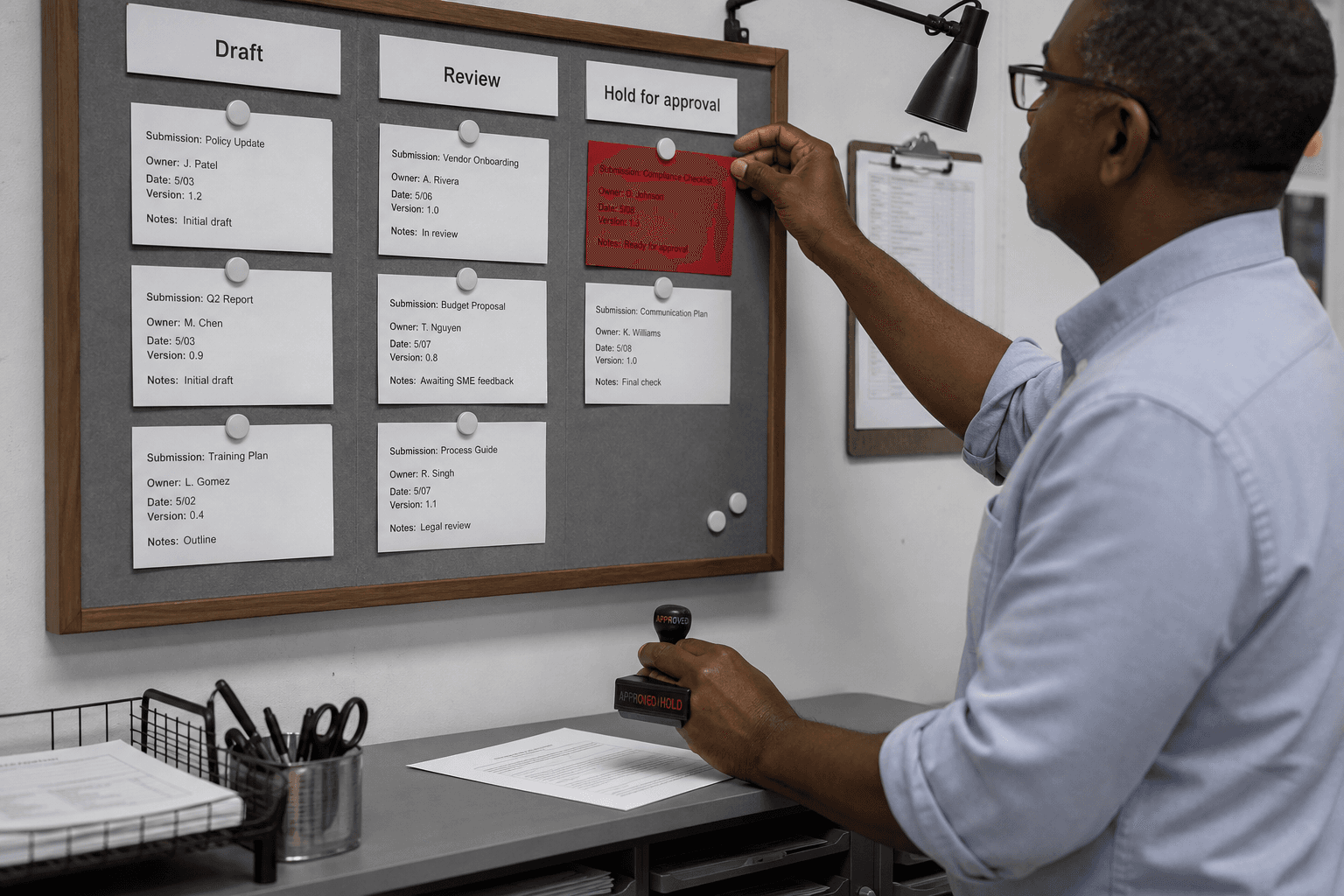
The human gate is not a personality. It is the rule: agents second. If an agent produces a sentence that sounds like identity, it still has to survive the same test as a menu change on a busy Saturday — a named human, a named record, a yes that can be found later.
How this connects to the hub
WhateverAsk is not a restaurant-only site. It is an operator-built knowledge hub. The restaurant pages stay as first proof. Builder journals exist so that proof is not mistaken for the whole identity.
Read this with I Thought ChatGPT Alone Would Be Enough. That entry is the one-window mistake. This entry is the many-agent mistake: speed without a gate.
The framework pages stay: How Work Runs, AI Native Builder, Guides, Operator Journal. A different builder week — What Stayed in the Work vs What Moved to Agents — is the split after the identity upgrade. This page is only the gate.
What another operator can take from the gate
You do not need this site’s internal map.
If more than one agent is in the work, write down:
- Who routes a question, and to which record.
- What must be verified live before anyone says the path exists.
- What a human must approve: public claims, new URLs, identity language, social distribution.
- What agents may take: drafts, comparison, packets that force hold / revise / execute.
- What must never skip the gate even when the draft is good.
If automation is faster than the approval, that is not a reason to skip the approval. That is the reason the gate exists.
Methodology and Data Period
- Entry type
- AI Native Business Builder Journal — builder week, not a kitchen recap
- Living lab
- Jeju Snow Salmon — case source, not promo channel
- Basis
- Firsthand observation of multi-agent work without a named public gate
- Evidence discipline
- No invented hours, traffic numbers, or AI-replacement percentages
- AI role
- Agents second — drafting and comparison only; human approval gate
- Status
- Preview only until Owner live-publish Decision